
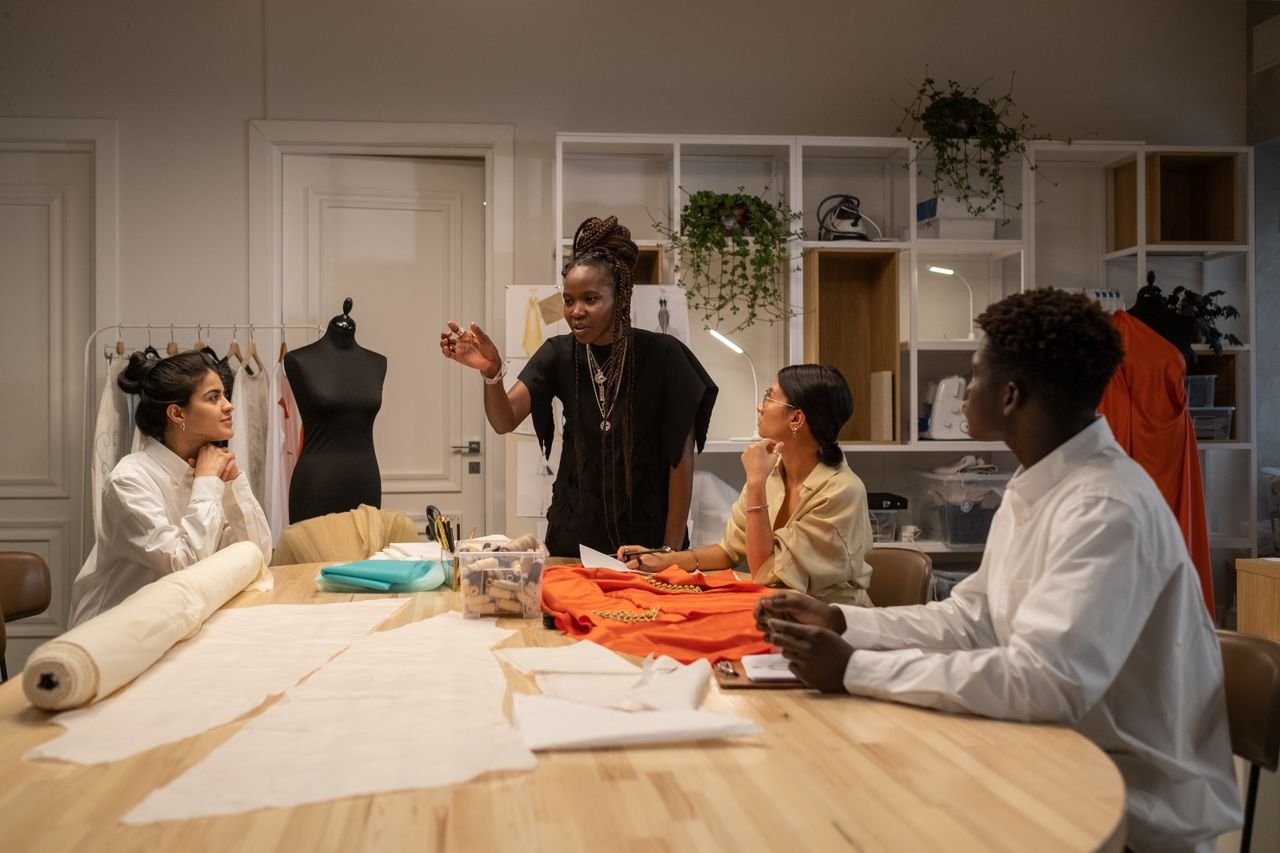
A pre-production meeting, commonly called a PP Meeting, is one of the most important control points before bulk apparel production begins.
It is often treated as a checklist meeting.
Approved sample? Checked.
Fabric? Checked.
Trims? Checked.
Specification? Checked.
Production schedule? Checked.
But the real purpose of a PP Meeting is not simply to complete a checklist.
The purpose is to determine whether the order is actually ready to enter bulk production—and to identify any unresolved issue that could become a larger production, quality, delivery, or cost problem later.
A good PP Meeting should answer one fundamental question:
Can we safely start bulk production under the conditions we have today?
Sometimes the answer is yes.
Sometimes the answer is no.
And sometimes production can proceed—but only under clearly defined conditions.
That is why effective PP Meeting management requires more than document review. It requires production judgment.
A PP Meeting Should Connect Development With Production
Before bulk production begins, many decisions have already been made.
The garment has gone through development.
Samples have been reviewed.
Fabric and trims have been selected.
Measurements and construction have been discussed.
Testing may have been performed.
Costing and production schedules have been established.
But these activities may have been handled by different people or departments.
The PP Meeting is where those decisions need to come together as one production-ready package.
The factory should confirm that what is about to be produced is consistent with what has actually been approved.
This creates a bridge between:
Development → Approval → Production Preparation → Bulk Production
If important information is missing at that bridge, the problem can move directly into production.

Do Not Ask Only Whether the Checklist Is Complete
A checklist is useful because it reduces the chance that important items are forgotten.
But a completed checklist does not automatically mean an order is ready for production.
The production team should understand the condition behind each item.
For example:
- Is the approved sample actually representative of bulk production?
- Is the final specification confirmed?
- Are construction details clear?
- Is the approved fabric the same condition as bulk fabric?
- Are trims approved and available?
- Are shrinkage and torque results understood?
- Is the production pattern based on confirmed conditions?
- Are wash requirements finalized?
- Are testing requirements completed?
- Are marker and cutting requirements clear?
- Are quality standards understood?
- Is the production schedule realistic?
- Are any customer decisions still pending?
The PP Meeting should identify uncertainty—not hide it behind a check mark.
Review the Approved Sample and Production Information Together
The approved sample is an important physical reference.
But the sample should not be reviewed separately from the documents and production information that support it.
The team should compare the applicable approved sample with items such as:
- Final specification
- Tech pack
- Construction details
- Artwork or placement requirements
- Fabric information
- Trim information
- Wash standard
- Measurement requirements
- Testing requirements
- Packing requirements
- Quality requirements
- Approved comments and revisions
The objective is to make sure different departments are not preparing to produce different versions of the same garment.
If the sample says one thing, the specification says another, and the production team understands something else, bulk production should not begin until the conflict is resolved.

Confirm Fabric Before Production
Fabric is one of the most important production inputs.
Before bulk cutting begins, the factory should understand the actual condition of the fabric that will be used.
Depending on the product, relevant information may include:
- Fabric approval
- GSM or weight
- Width and cuttable width
- Shade
- Shrinkage
- Torque or spirality
- Bow or skew
- Fabric defects
- Lot and roll condition
- Usable quantity
- Testing status
- Special cutting requirements
The PP Meeting does not replace fabric inspection or laboratory testing.
Instead, it confirms that the necessary fabric information is available and that production teams understand how it affects the order.
For more on evaluating bulk fabric before it is released to production, see Fabric Inspection and the 4-Point System: How to Control Fabric Quality Before Cutting.
Confirm Trims and Components
Trims and components can affect construction, function, appearance, safety, and production sequence.
These may include:
- Zippers
- Buttons
- Snaps
- Labels
- Elastic
- Drawcords
- Thread
- Interlining
- Rib
- Packaging components
- Other product-specific items
The team should understand not only whether a trim has been ordered, but whether it is approved, available, and suitable for the intended production process.
A missing trim does not always mean the same thing as an unapproved trim.
That distinction is critical.
Missing Material and Unapproved Material Are Different Problems
One of the most useful distinctions in production-readiness decisions is the difference between availability and approval.
A material may already be approved but not yet fully delivered.
That is primarily a scheduling and production-flow issue.
Another material may already be physically available but still be awaiting approval or required testing.
That is an authorization and product-risk issue.
The two situations should not be managed in the same way.
A useful principle is:
Missing quantity is a scheduling question.
Missing item is a production-sequence question.
Unapproved material or unresolved testing is a production-authorization question.
Understanding which problem the factory actually has makes the GO/HOLD decision much clearer.
Partial Quantity Does Not Always Require a Production Hold
Suppose the approved fabric or trim has arrived, but only part of the total required quantity is currently available.
The immediate response does not necessarily need to be:
HOLD PRODUCTION.
First, confirm the balance quantity and its expected arrival date.
Then compare that date with the actual production plan.
If enough approved material is available to start production and there is reasonable confidence that the balance will arrive before production reaches the point where the material shortage would stop the process, production may be able to proceed.
The decision should consider:
- Quantity currently available
- Quantity still outstanding
- Confirmed balance ETA
- Daily production requirement
- Material consumption
- Production sequence
- Available buffer
- Risk of line stoppage
The objective is to determine whether production can continue without interruption.
A Missing Item Should Be Evaluated Against the Production Sequence
A different situation occurs when a particular material or trim item has not yet arrived at all.
In this case, the important question is:
At what stage of production is this item required?
A component needed at the beginning of sewing creates a very different risk from a packaging item required much later.
If the missing item has a confirmed arrival date and can be received, inspected, and released before the production process reaches the operation where it is required, the factory may decide to proceed with earlier operations.
But this decision should be based on the actual production sequence—not optimism.
The team should know:
Current Production Stage → Item Arrival → Inspection/Release → Required Operation
If those timings do not safely align, production should not proceed on the assumption that everything will somehow arrive in time.
Material Approval Pending Means HOLD
Availability should never be confused with approval.
If a material has not received the required approval, production should not proceed merely because the material is physically present in the factory.
The material may later be rejected for color, construction, performance, appearance, hand feel, dimensional stability, or another required characteristic.
Using it before approval can multiply the risk across bulk production.
For this reason, a clear production rule is appropriate:
Material not approved → HOLD
The cost of waiting for a required approval can be frustrating.
The cost of producing thousands of garments from an unapproved material can be much greater.
Unresolved Required Testing Means HOLD
The same principle applies to required testing.
If a test result is necessary to confirm whether the material or product is acceptable for bulk production, and that result remains unresolved, the factory does not yet have the information needed to authorize production safely.
Depending on the product and customer requirement, testing may relate to:
- Dimensional stability
- Shrinkage
- Torque
- Colorfastness
- Fabric performance
- Seam performance
- Strength
- Appearance
- Functional performance
- Regulatory or customer-specific requirements
Not every order requires the same tests.
But when a required test is still unresolved, production should not simply assume that the result will be acceptable.
Required test unresolved → HOLD
Customer Confirmation Required Means HOLD
Some PP Meeting issues cannot be decided internally by the factory or vendor.
If an unresolved issue requires customer confirmation, approval, or direction, production should be held until that decision is received.
Examples can vary by account, but they may involve:
- Fit
- Measurement
- Construction
- Appearance
- Material
- Color
- Artwork
- Wash result
- Trim
- Specification interpretation
- Approved sample discrepancy
The important issue is not the category.
It is decision authority.
If the customer owns the decision, the factory should not replace customer approval with an internal assumption.
A practical rule is:
Customer confirmation required → HOLD
Not Every Open Issue Requires a Customer Decision
At the same time, sending every small production question back to the customer can create unnecessary delays.
Factories and vendors often develop significant knowledge through repeated production for the same account.
Previous orders can provide useful information about:
- Accepted construction methods
- Measurement interpretation
- Workmanship expectations
- Finishing
- Packing
- Production tolerances
- Previous approvals
- Customer preferences
That history can help experienced teams resolve routine operational questions without unnecessarily stopping production.
But account history should be used as evidence—not as permission to ignore risk.
Previous Account Experience Can Support a Production Decision
When an issue does not require customer approval, previous experience with the same account can become a useful decision-making tool.
The team can ask:
Have we handled the same or a very similar situation before?
What was previously approved or accepted?
Is the current product condition genuinely comparable?
Would the decision create any recognizable problem in the finished garment?
This allows production management to use accumulated knowledge rather than treating every order as if the factory had never produced for that customer before.
But experience should improve judgment—not replace it.
The Finished Garment Is the Final Reality Check
Even when previous account experience supports an internal decision, one final question should remain:
If we produce the garment this way, is there a reasonable expectation that the finished product will have no normally recognizable quality, fit, appearance, or functional problem?
If the answer is uncertain, the issue needs further review.
This is important because a technically explainable production decision is not necessarily a good production decision.
The finished garment still has to work as a product.
Production experience should therefore be used together with common-sense product judgment.
GO, CONDITIONAL GO, and HOLD
A useful PP Meeting does not need to force every issue into only two categories.
In practice, three decision levels can be helpful.
GO
The necessary approvals, materials, testing, production information, and operational conditions are sufficiently confirmed for production to begin.
CONDITIONAL GO
Production can begin, but a known pending item must be resolved before a clearly defined production point.
HOLD
An unresolved issue creates unacceptable production risk or requires approval, testing, material confirmation, or customer direction before production can safely proceed.
The value of these categories is not the terminology itself.
The value is that everyone understands the actual status of the order.
Conditional GO Does Not Mean “Start and Hope”
Conditional production should never mean:
“Let’s start now and solve the problem later.”
That is not production control.
A legitimate Conditional GO should identify:
- What is pending
- Why production can safely begin
- Who is responsible for follow-up
- When the issue must be resolved
- What production stage cannot be passed without resolution
- What action will be taken if the condition is not met
For example, if an approved trim is scheduled to arrive before the sewing operation that requires it, earlier operations may be able to proceed.
But the production team should know exactly where the stop point is if the trim does not arrive as promised.
Conditional GO requires a control point.
Without one, it is simply uncontrolled risk.
Do Not Allow Production Momentum to Make the Decision
Once cutting or sewing begins, production develops momentum.
Fabric is consumed.
Labor is assigned.
Bundles move.
Output targets begin.
Delivery schedules become more difficult to change.
This creates pressure to continue even when a problem appears.
That is why important production-readiness decisions should be made before momentum takes over.
The PP Meeting provides an opportunity to stop and resolve issues while corrective action is still relatively manageable.
A ten-minute decision before bulk production may prevent days of repair, sorting, replacement, or customer negotiation later.
Shrinkage, Pattern, and Wash Must Agree
For products affected by washing or dimensional change, the PP Meeting should confirm that the relevant shrinkage information has been incorporated into production decisions.
The team should understand:
- Fabric shrinkage history
- Length and width behavior
- Garment wash-test results
- Torque where relevant
- Confirmed wash process
- Production pattern adjustment
- Finished measurement requirement
If shrinkage was measured under one condition but the production wash will use another, the pattern assumption may no longer be valid.
Likewise, if bulk fabric behaves differently from development fabric, the issue should be understood before large-scale cutting begins.
The objective is to confirm that fabric behavior, garment construction, wash process, and production pattern are aligned.
For a deeper look at managing dimensional stability from development through bulk production, see Garment Shrinkage Control: From Fabric Testing to Bulk Production.
Cutting Requirements Should Be Confirmed Before Fabric Is Spread
The PP Meeting should also identify any cutting requirement that cannot safely be decided after spreading begins.
These may include:
- Actual cuttable width
- Fabric relaxation
- Shade segregation
- Lot/roll control
- Directional fabric
- Stripe/check matching
- Print placement
- Nap direction
- Special marker
- Special cutting method
- Numbering and bundling requirements
Fabric-inspection information should already be available to support these decisions where applicable.
The cutting room should not discover important fabric characteristics only after the marker has been prepared or the lay has been spread.
Sewing Construction Must Be Clear Before Line Setup
Sewing supervisors and operators need a clear production method.
The PP Meeting should confirm the important construction requirements before the line is established.
Depending on the garment, this may include:
- Seam construction
- Stitch type
- SPI
- Machine requirement
- Attachments or folders
- Thread
- Operation sequence
- Reinforcement
- Critical workmanship points
- Measurement-sensitive operations
- Quality checkpoints
If a difficult operation is already known during sample development, the production team should plan for it before bulk sewing.
Production is not the best place to rediscover a problem that was already visible during development.
Quality Control Should Be Built Into the Production Plan
Quality should not begin at final inspection.
The PP Meeting should identify where important quality checks need to occur during production.
This may include:
Fabric → Cutting → Sewing → Washing/Finishing → Packing → Final Inspection
Critical checkpoints depend on the garment.
For one product, shade may be the major risk.
For another, measurement after wash may be critical.
Another may require strict stripe matching or special workmanship.
The purpose is to identify those risks before production and place controls where the problem can be detected early.
Production Schedule Must Reflect Reality
A production schedule should not be treated as valid simply because dates have been entered into a plan.
The PP Meeting should compare the schedule with actual readiness.
Questions may include:
- Is enough fabric available to start?
- When will the balance arrive?
- Are critical trims available?
- Are required tests complete?
- Is the production pattern ready?
- Is cutting ready?
- Is the sewing line available?
- Are machines and attachments ready?
- Is wash capacity confirmed?
- Are finishing and packing materials available?
- Does the shipment date still remain achievable?
If readiness changes, the production plan may need to change with it.
Ignoring the mismatch does not protect the delivery date.
It simply postpones recognition of the problem.
For more on connecting order requirements, factory capacity, and production schedules, see Apparel Production Planning & Lead Time: From PO to Warehouse Delivery.
Record Open Issues and Ownership
Every unresolved PP Meeting item should have an owner.
A useful open-issue record should identify:
- Issue
- Current status
- Required action
- Responsible person or department
- Due date
- Production impact
- GO / Conditional GO / HOLD status
This turns the PP Meeting from a discussion into an action-control process.
Without ownership, everyone may know about a problem while nobody actually resolves it.
PP Meeting Decisions Should Follow Production
The value of a PP Meeting does not end when the meeting finishes.
Important decisions and special instructions should follow the order into production.
Cutting should know the cutting requirements.
Sewing should know the construction requirements.
Quality should know the critical checkpoints.
Washing should know the approved process.
Finishing and packing should know their applicable requirements.
Production management should know every conditional item that still needs follow-up.
The information flow should continue:
PP Meeting → Cutting → Sewing → Washing/Finishing → Packing → Final Inspection
A decision that remains only in meeting notes has limited production value.
A PP Meeting Is a Risk-Control Meeting
Ultimately, the PP Meeting is not just an administrative meeting.
It is a production-risk meeting.
Its job is to identify problems while the factory still has choices.
Before cutting, fabric can still be held.
Before sewing, construction can still be clarified.
Before washing, the process can still be confirmed.
Before bulk production, customer questions can still be answered without affecting thousands of garments.
The further production moves, the more expensive many corrections become.
This is why the best PP Meetings focus not only on what is ready—but also on what can still go wrong.
Final Takeaway
A successful PP Meeting should determine whether an apparel order is truly ready for bulk production.
The objective is not simply to complete a checklist.
Approved samples, specifications, fabric, trims, testing, shrinkage, wash requirements, cutting instructions, sewing construction, quality checkpoints, and the production schedule should be reviewed as one connected production system.
Open issues should then be classified according to their actual risk.
Customer confirmation required → HOLD
Material approval pending → HOLD
Required testing unresolved → HOLD
Partial approved material quantity missing → Compare balance ETA with production continuity
Specific approved item missing → Compare item ETA with the production stage where it is required
Routine operational issue → Evaluate previous account experience and finished-garment risk
Where production can safely proceed with a pending item, a Conditional GO may be appropriate—but only when the pending issue, owner, deadline, and production stop point are clearly defined.
Most importantly, the PP Meeting should protect the finished product.
The right question is not simply, “Can we start production?” It is, “Do we have enough confirmed information, approved materials, and production control to start without creating an unacceptable risk in the finished garment?”
When that question is answered carefully, the PP Meeting becomes much more than a factory checklist.
It becomes one of the most effective opportunities to prevent quality problems, production delays, additional cost, and delivery risk before bulk production begins.
Need Help With Pre-Production Planning & Production Readiness?
Apparel Production Lab provides practical consulting for apparel development, pre-production planning, material and testing readiness, production management, quality control, costing, and factory execution.
Whether you need help building a practical PP Meeting process, establishing GO/HOLD decision criteria, managing pending materials, connecting approvals with production schedules, or identifying production risks before bulk manufacturing begins, we can help develop a practical approach around your product, customer, and factory requirements.