
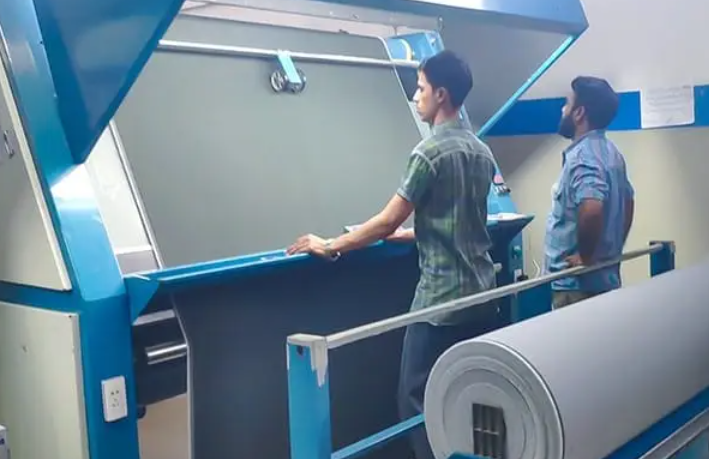
Fabric inspection is often described as a quality-control procedure.
That is true—but it is only part of the reason fabric inspection matters in apparel production.
The larger purpose is to identify and reduce fabric-related risks before those problems are allowed to move into cutting, sewing, finishing, and shipment.
A fabric problem discovered before cutting may still be manageable. The same problem discovered after thousands of garments have been cut or sewn can become a production shortage, delivery problem, claim, charge-back, or significant cost increase.
In serious cases, repeated quality and delivery failures can also damage buyer confidence and reduce future re-orders.
Fabric inspection should therefore be viewed not simply as a process for finding defects, but as an important part of production risk control.
The objective is not merely to ask:
“Does this fabric pass inspection?”
The more useful question is:
“Is this fabric ready to enter bulk garment production without creating unacceptable quality, quantity, delivery, or cost risk?”
Why Fabric Inspection Should Happen Before Cutting
Once fabric has been cut, the options for correcting a material problem become much more limited.
Before cutting, a factory may still be able to segregate defective rolls, replace unacceptable material, adjust marker planning, investigate shade variation, verify usable quantity, or work with the fabric supplier on corrective action.
After cutting begins, those same problems may already be distributed across hundreds or thousands of garment components.
That is why the timing of fabric inspection is so important.
A proper inspection gives the production team an opportunity to understand the condition of the incoming material before committing it to garment production.
Potential problems can include:
- Fabric defects
- Incorrect width
- Incorrect GSM or weight
- Shade variation
- Bow or skew
- Shrinkage problems
- Incorrect roll length
- Short quantity
- Excessive unusable fabric
- Fabric performance outside the approved requirement
The earlier these issues are identified, the more options the production team has to control their impact.
Fabric Problems Can Become Business Problems
A fabric defect does not remain a fabric problem if it enters production unnoticed.
It can become a cutting problem.
A cutting problem can become a sewing shortage.
A sewing shortage can become a short shipment.
And a short shipment can become a commercial problem.
The chain may look something like this:
Fabric Problem → Production Loss → Short Quantity → Short Shipment → Charge-Back / Cost Increase → Buyer Dissatisfaction → Reduced Re-orders
Not every fabric defect will create this entire sequence.
But the purpose of good production management is not to wait and see whether it happens.
It is to reduce the possibility before the risk becomes expensive.
This is why fabric inspection should be understood as both a quality-control activity and a commercial risk-control activity.
What Is the 4-Point Fabric Inspection System?
The 4-Point System is a commonly used method for evaluating visible fabric defects.
Instead of treating every defect as equally serious, points are assigned according to the size or severity of the defect.
Under a commonly used 4-Point grading method, penalty points are assigned according to the size of the defect:
A typical grading structure is:
- Defect up to 3 inches (75 mm): 1 point
- Defect over 3 inches and up to 6 inches (150 mm): 2 points
- Defect over 6 inches and up to 9 inches (230 mm): 3 points
- Defect over 9 inches (230 mm): 4 points
The applicable grading method and acceptance criteria should always follow the buyer’s or agreed inspection standard.
Holes and openings are also normally evaluated according to the applicable inspection standard or buyer requirement.
The inspector records the defects found while examining the fabric roll and calculates the resulting defect level.
This provides a more consistent way to compare fabric quality between rolls, lots, and suppliers.
However, the point calculation should never be confused with the complete purpose of fabric inspection.
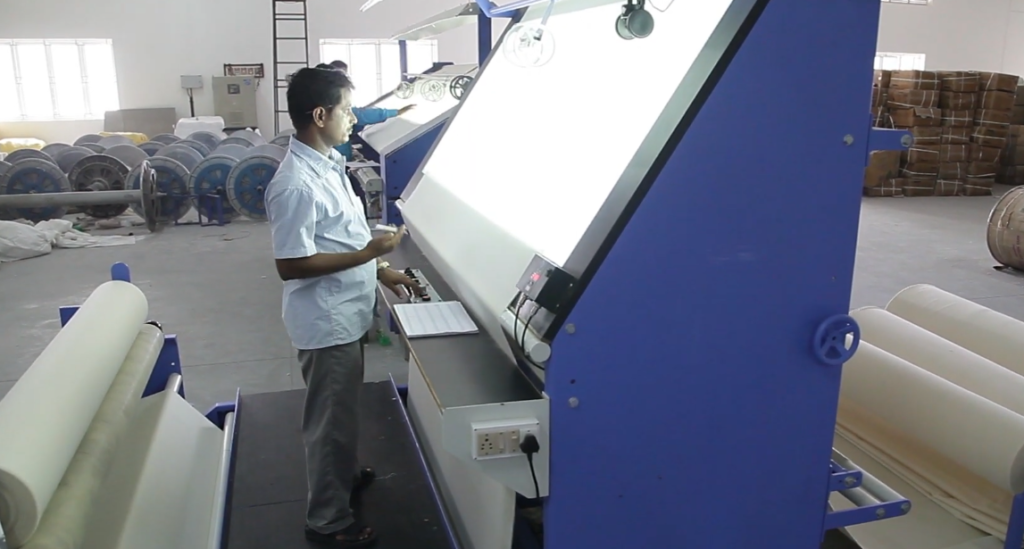
The 4-Point System Is a Tool, Not the Entire Inspection
One of the most important principles in fabric inspection is this:
Passing a 4-Point inspection does not automatically mean that the fabric is production-ready.
The 4-Point System is primarily a method for evaluating visible fabric defects.
Garment production requires more information than a defect score alone can provide.
A roll may have an acceptable point score and still create production problems because of incorrect width, excessive shrinkage, shade variation, bow or skew, incorrect GSM, or insufficient usable quantity.
For this reason, the defect score should be considered as one part of a broader fabric evaluation.
The final production decision should consider whether the fabric can actually support the approved garment specification and planned production quantity.
What Else Should Be Checked During Fabric Inspection?
The exact inspection requirements depend on the fabric, garment, buyer requirements, and production situation.
However, several additional areas commonly need to be reviewed.
1. Fabric Width
Actual fabric width should be compared with the approved requirement.
The factory should also understand the difference between total or finished width and the usable or cuttable width available for marker planning.
A roll that is technically within a nominal width range may still create consumption problems if the practical cuttable width is insufficient.
2. GSM or Fabric Weight
For fabrics controlled by GSM or another weight specification, actual production should be checked against the approved standard and applicable tolerance.
A significant weight difference may affect appearance, hand feel, performance, yield, consumption, and garment cost.
3. Shade Variation
Shade should be evaluated both within rolls and between rolls where applicable.
Uncontrolled shade variation can become especially serious after cutting if garment panels from incompatible shade groups are mixed during sewing.
4. Bow and Skew
Bow and skew can affect fabric alignment, garment appearance, pattern placement, stripes, and garment construction.
The acceptable level depends on the fabric and product requirements.
5. Shrinkage and Dimensional Stability
Fabric may change after washing, finishing, relaxation, or garment processing.
If actual shrinkage differs significantly from the value used during pattern development, the finished garment may fail dimensional or fit requirements.
6. Roll Length and Quantity
Actual roll length and delivered quantity should be verified where required.
A packing list or supplier document does not automatically guarantee that the usable fabric quantity available to production matches the quantity on paper.
7. Usable Quantity
This is ultimately one of the most important production questions.
After defects, edge loss, rejected sections, shade segregation, and other restrictions are considered:
How much fabric is actually available for garment production?
That number can be more important than the gross quantity received.
For a broader look at controlling materials from approval through bulk production, see Apparel Fabric & Trim Management From Approval to Production.
Fabric Inspection Percentage Should Be Based on Risk
A frequently discussed question is how much of the incoming fabric should be inspected.
Sometimes a fixed percentage—such as 10%—is treated as if it were a universal rule.
That approach can be misleading.
There is no single inspection percentage that is appropriate for every fabric order.
The inspection level should reflect the production and commercial risk of the specific order.
Factors may include:
- Total fabric quantity
- Order size
- Type of garment
- Fabric type and construction
- Buyer requirements
- Brand quality expectations
- Supplier performance
- Previous defect history
- New versus repeat fabric
- Complexity of finishing
- Potential impact of a failure
- Available replacement lead time
- Delivery sensitivity
A relatively stable repeat program from a proven supplier may not present the same risk as a new fabric from a new mill for a highly sensitive order.
Likewise, a small defect rate can have very different commercial consequences depending on the order.
The inspection plan should therefore be based on risk, not habit.
When Inspection Should Be Expanded
A sampling inspection is useful only when the inspected material provides reasonable confidence about the condition of the remaining bulk.
If the initial inspection identifies repeated or serious problems, continuing to rely on the original sampling percentage may no longer be appropriate.
The production team may need to increase the inspection level, inspect additional rolls, isolate suspect lots, or move toward a more extensive inspection depending on the situation.
The decision should be based on the type and frequency of the problem and the risk it creates for production.
This is another reason a fixed inspection percentage should not become an automatic rule.
The inspection process needs to respond to what the fabric is actually showing.
Roll-by-Roll Information Matters
A total inspection result for an entire shipment can hide important differences between individual rolls.
One roll may be relatively clean while another contains concentrated defects.
Different rolls may also show differences in shade, width, or other characteristics.
Recording information by roll gives the cutting and production teams more useful information for planning.
Depending on the situation, roll-level records may include:
- Roll number
- Lot or batch
- Shade group
- Actual length
- Width
- Defect points
- Major defect locations
- Usable quantity
- Inspection status
- Remarks or restrictions
This information can help determine which rolls should be used together, which should be segregated, and which require further review.
Defect Location Can Matter as Much as Defect Score
Two rolls with similar total defect scores may not create the same production risk.
A roll with small, scattered defects may behave differently in cutting from a roll with repeated defects concentrated through a particular area.
The location and pattern of defects therefore matter.
If a defect repeats continuously along the length of the fabric, the effect on marker utilization and cutting loss can become much greater than the total point number alone might suggest.
This is why experienced inspection should not become a purely mathematical exercise.
The score helps standardize evaluation, but the production team still needs to understand what the defects mean for actual cutting and garment production.
Shade Control Should Be Connected to Cutting
Shade variation is a good example of why inspection information should not remain only in the quality department.
If fabric rolls are separated into shade groups during inspection, that information needs to follow the material into spreading and cutting.
Otherwise, panels from different shade groups may be mixed in the same garment.
Once those garments are sewn, correcting the problem can become extremely difficult.
Inspection data becomes valuable only when it is communicated to the departments that need to act on it.
Fabric inspection should therefore connect with:
Fabric Warehouse → Cutting → Sewing → Quality Control → Production Management
rather than operating as an isolated inspection activity.
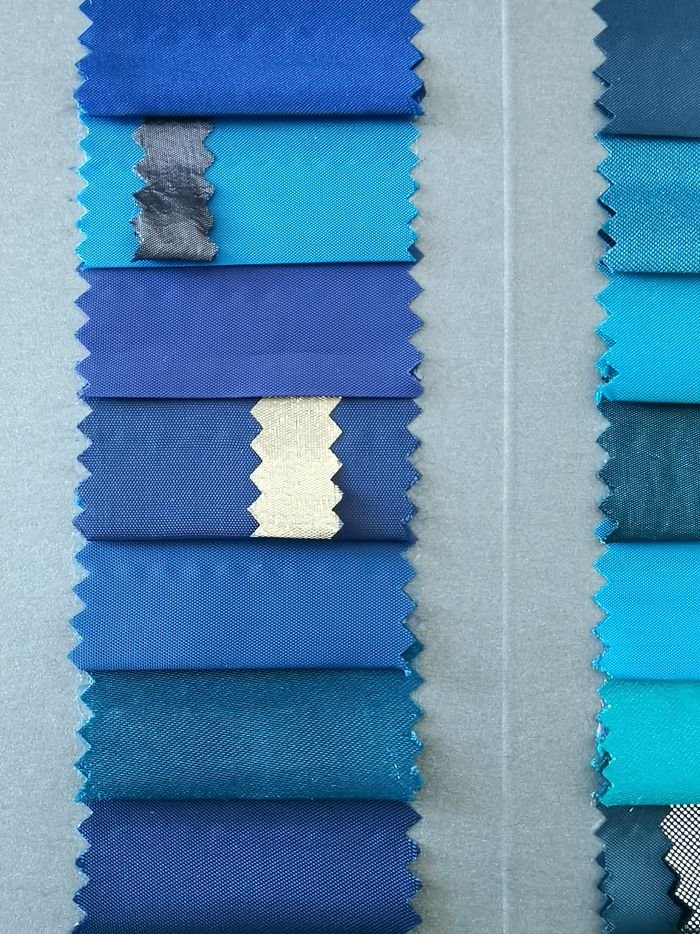
Fabric Width and Usable Quantity Affect Cost
Fabric defects are not the only source of material loss.
If the usable width is consistently lower than planned, marker consumption may increase.
If defects require sections of fabric to be removed, usable yardage decreases.
If shade groups cannot be mixed freely, spreading and marker planning may become less efficient.
If actual roll lengths are short, the available production quantity may be lower than expected.
Each of these conditions can increase the amount of fabric required to complete the garment order.
Because fabric is often one of the largest components of garment cost, small losses can become commercially significant across a large order or repeated production program.
Fabric inspection is therefore closely connected to cost control, not only quality control.
What Happens When Fabric Inspection Is Weak?
Weak incoming fabric control often shifts the problem downstream.
Cutting discovers that usable width is short.
Sewing discovers that cut quantity is insufficient.
Quality discovers shade variation in finished garments.
Production discovers that replacement fabric is required.
Merchandising discovers that the shipment date is at risk.
Management discovers that the order cost has increased.
And sometimes the buyer discovers the problem last.
By that point, the factory has fewer options and less time.
The cost of preventing a problem before cutting is usually much easier to manage than the cost of correcting the same problem after production has already progressed.
For a broader view of quality inspection throughout garment production, see Apparel Quality Inspection: From Cut Pieces to Final AQL Inspection.
Fabric Inspection Should Lead to a Production Decision
The purpose of an inspection report is not simply to create a document.
The result should lead to a decision.
Depending on the findings, the decision may be:
- Release the fabric for production
- Release with specific restrictions
- Segregate certain rolls
- Separate shade groups
- Increase inspection
- Request replacement fabric
- Adjust cutting or marker planning
- Review consumption and usable quantity
- Hold the fabric for technical evaluation
- Reject unacceptable material
The appropriate action depends on the problem and the requirements of the order.
The key is that inspection findings should be converted into production action before cutting begins whenever possible.
For more on turning production information into timely factory decisions, see Apparel Production Management: Production From Cutting to Shipment.
Fabric Inspection Is an Opportunity to Protect the Order
A fabric inspection is sometimes viewed as another checkpoint that must be completed before production.
A better way to view it is as an opportunity.
It is one of the last major opportunities to identify material risk while the fabric is still fabric—before it becomes cut panels, sewn garments, packed units, and shipping commitments.
At this stage, problems may still be isolated and controlled.
Later, the same problems become progressively more expensive.
Effective fabric inspection helps protect:
- Garment quality
- Production quantity
- Cutting efficiency
- Delivery performance
- Garment cost
- Buyer requirements
- Supplier performance
- Future business
That is why fabric inspection deserves attention from production management, sourcing, merchandising, costing, and quality teams—not only inspectors.
Final Takeaway
The 4-Point System is an important and useful method for evaluating fabric defects, but fabric inspection should never be reduced to a point score.
A fabric roll can achieve an acceptable defect score and still be unsuitable for production because of width, GSM, shade, bow or skew, shrinkage, quantity, or other problems.
Likewise, no single inspection percentage is appropriate for every order.
The inspection level should reflect the actual risk of the fabric, supplier, garment, buyer, order quantity, and delivery situation.
The real purpose of fabric inspection is to identify and control material-related risks before those risks become garment-production problems.
A good inspection program therefore asks more than:
“Did the fabric pass?”
It asks:
“Do we understand this fabric well enough to release it into production without creating unacceptable quality, quantity, delivery, or cost risk?”
That is the point where fabric inspection becomes part of effective apparel production management.
Need Help With Fabric Quality & Production Control?
Apparel Production Lab provides practical consulting for fabric sourcing, quality management, garment production, costing, and production-risk control.
Whether you need help developing a fabric inspection process, evaluating material problems before cutting, improving supplier quality control, or reducing fabric-related production losses, we can help build a practical approach around your product and production requirements.