
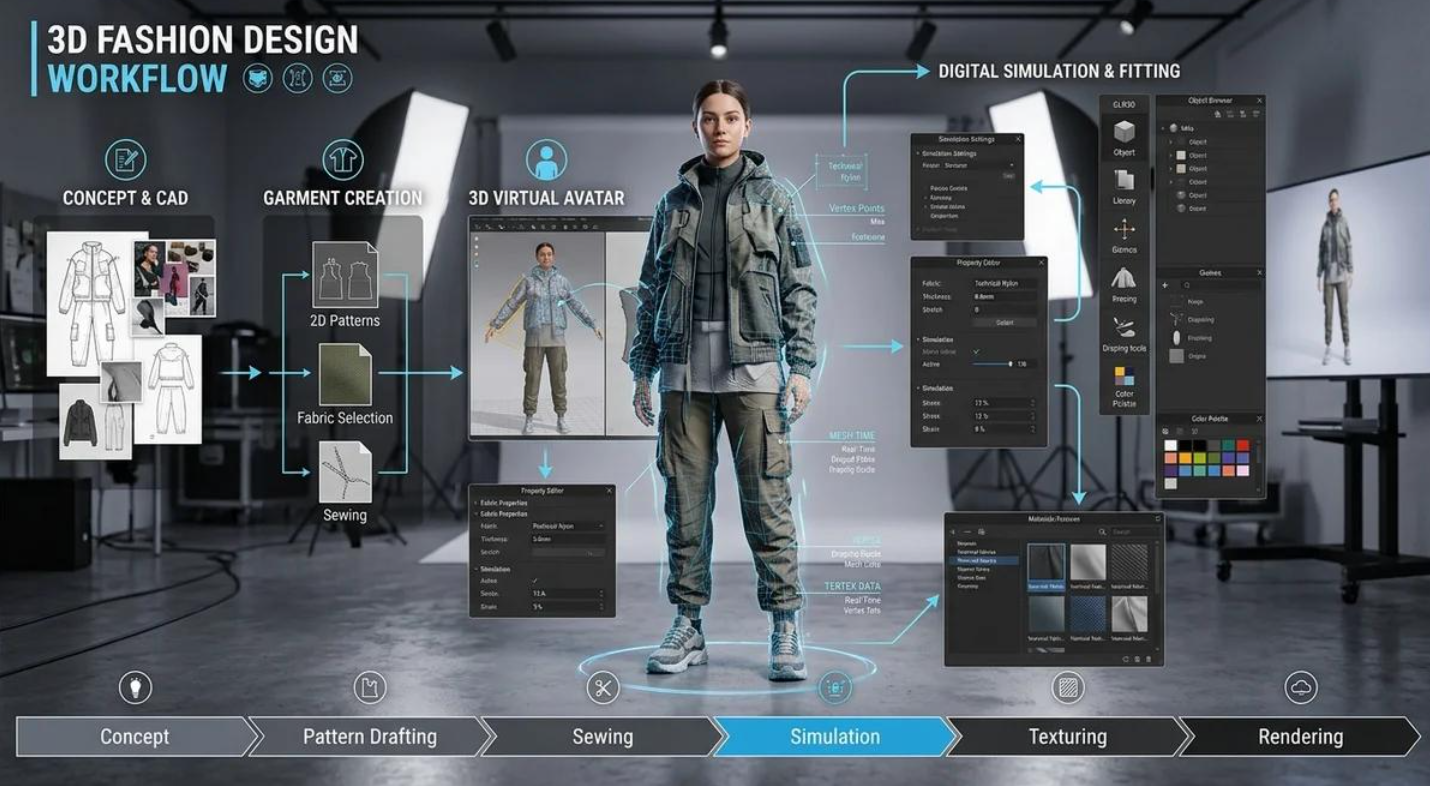
From One Garment Photo to a Simulation-Ready 3D Sample: What OmniFabric Could Mean for Apparel Development
3D garment development has already changed the way apparel companies design, review, and approve garments.
3D garment software can reduce physical samples, accelerate design decisions, and allow teams in different countries to review products before production begins.
But creating a useful 3D garment still requires something important:
A reliable digital garment asset.
A recent research project called OmniFabric points toward a future in which creating that asset could become much easier.
Presented at SIGGRAPH Asia 2026, OmniFabric explores how a single garment image can be transformed into a textured, simulation-ready 3D garment.
For apparel professionals, the important question is not simply how impressive the technology looks.
The more useful question is:
What could technology like this eventually change in real apparel product development?
What Is OmniFabric?
OmniFabric is a research framework for reconstructing a textured 3D garment from a single reference image.
The challenge is more complicated than simply turning a photograph into a three-dimensional shape.
A normal garment photograph contains many visual effects that do not actually belong to the fabric.
These can include:
- Shadows
- Highlights
- Wrinkles
- Lighting variations
- Perspective distortion
- Areas of the garment hidden from the camera
If those effects are simply copied into a 3D texture, the resulting digital garment may look acceptable from one viewpoint but perform poorly when the garment is rotated, relit, or physically simulated.
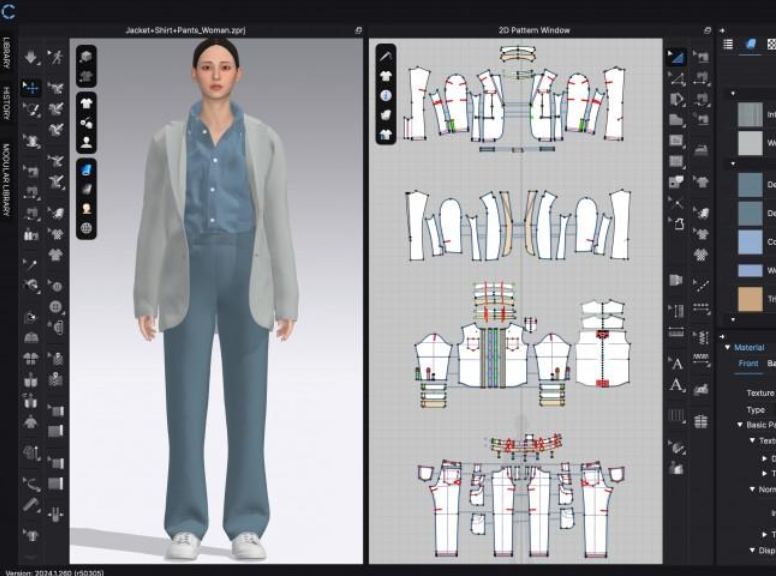
OmniFabric addresses this problem by working with the garment’s 2D sewing-pattern space.
The system first builds an estimated garment mesh and an initial texture from generated views of the garment. It then normalizes the texture in the UV sewing-pattern domain, removing distortions and visual artifacts such as baked-in shadows and wrinkles.
The result is a cleaner textured sewing pattern that can be placed back onto a 3D garment and used for simulation.
That distinction is important.
The objective is not merely to generate an attractive 3D picture.
It is to create a digital garment asset that can continue into a simulation workflow.
Why the Sewing Pattern Matters
For people outside apparel manufacturing, a garment may simply look like a three-dimensional object.
For apparel professionals, however, every garment begins as a collection of two-dimensional pattern pieces.
Front body.
Back body.
Sleeves.
Collars.
Cuffs.
Waistbands.
Pockets.
And many other components depending on the style.
These pieces are sewn together to create the final three-dimensional garment.
This makes the sewing-pattern space a particularly interesting place for AI-based garment reconstruction.
Instead of treating the garment only as a 3D surface, OmniFabric attempts to create coherent textures across the underlying pattern pieces.
That can help preserve important visual relationships such as graphics, prints, color placement, and other design details when the garment is reconstructed and simulated.
For apparel development, this is much closer to the language of actual garment construction.
From a Photograph to a Digital Garment
The concept can be simplified into several stages.
Step 1 — Start With a Garment Image
The system receives a reference image of a garment.
Unlike a controlled studio-based 3D scanning process, the research is designed to work with garments appearing in ordinary images.
Step 2 — Estimate the Garment Structure
The system estimates the garment geometry and sewing-pattern structure needed to build a digital garment mesh.
Step 3 — Generate Additional Views
Because one photograph cannot show the back, sides, or hidden portions of a garment, additional views are generated to help reconstruct the complete appearance.
Step 4 — Build an Initial Texture
Those views are projected onto the estimated garment geometry to create an initial texture across the sewing-pattern pieces.
At this stage, distortions, lighting effects, and other artifacts may still exist.
Step 5 — Normalize the Texture
OmniFabric then processes the texture directly in the sewing-pattern UV space.
The system attempts to remove distortions and baked-in effects such as shadows and wrinkles while preserving the garment’s underlying visual design.
Step 6 — Simulate the Garment
The resulting textured sewing pattern can then be applied to a garment simulation system.
The research demonstrates the reconstructed garments through physical simulation and different lighting conditions.
Why 3D Garment Development Matters for Apparel Product Development
Today, digital sampling usually begins with structured information.
A 3D garment developer may need:
- Pattern files
- Fabric properties
- Construction information
- Artwork files
- Measurements
- Trims
- Color information
Building the digital sample can therefore require considerable preparation before the first useful 3D visualization appears.
Image-based garment reconstruction introduces another possibility.
Imagine a buyer, designer, or product developer starting with:
a garment photograph, reference sample, vintage garment, competitive product, or design inspiration image.
Instead of manually rebuilding everything from the beginning, AI could potentially generate a preliminary digital garment that becomes the starting point for further development.
That could significantly change the earliest stages of product development.
Potential Use Case 1 — Faster Concept Development
Design teams often work from reference images.
Today, translating those references into an actual garment may involve several intermediate steps before a usable sample exists.
Image-to-3D garment technology could shorten that process.
A reference image could potentially become an initial digital garment that designers and technical teams can immediately review and modify.
The goal would not necessarily be to eliminate designers or pattern makers.
Instead, it could give them a much faster starting point.
Potential Use Case 2 — Reducing Early Physical Samples
Physical samples remain essential in apparel development.
Fit, workmanship, fabric behavior, construction quality, and many other characteristics still require physical evaluation.
But not every development decision requires a physical garment.
Some early decisions involve:
- Silhouette
- Color
- Print placement
- Proportion
- Design direction
- Styling
If realistic digital garments can be generated more quickly, more of these decisions could potentially be made before the first physical sample is produced.
That could reduce unnecessary sample rounds.
Potential Use Case 3 — Faster Communication With Factories
One of the most common problems in apparel development is interpretation.
A buyer may send a photograph and say:
“We want something similar to this.”
But different factories may interpret the same photograph differently.
A reconstructed 3D garment could potentially provide another layer of communication between the buyer and factory.
Instead of relying only on photographs and written descriptions, both sides could review a common digital reference.
That could help clarify silhouette, proportions, artwork placement, and overall design intent earlier in the process.
Potential Use Case 4 — Digital Libraries of Existing Products
Brands and sourcing companies often possess thousands of historical styles.
Many exist only as:
- Photographs
- Old samples
- Archived tech packs
- Discontinued patterns
Converting these products into structured digital assets manually would require enormous effort.
Image-based reconstruction technologies could eventually help companies build digital garment libraries from existing product archives.
Those libraries could then support new product development, merchandising, design reference, and virtual presentation.
But a 3D Image Is Not Yet a Production-Ready Garment
This distinction is extremely important.
A visually convincing 3D garment should not automatically be treated as a manufacturing specification.
Real garment production still requires accurate information such as:
- Pattern dimensions
- Grading
- Seam construction
- Stitch specifications
- Fabric characteristics
- Shrinkage
- Stretch and recovery
- Trims
- Tolerances
- Measurement specifications
- Workmanship requirements
A reconstructed garment may provide an excellent visual and simulation asset while still requiring substantial technical development before it can be manufactured.
In other words:
Visual reconstruction and production engineering are not the same thing.
That distinction should remain clear as AI tools enter apparel development.
The Role of the Pattern Maker and Technical Designer Will Change — Not Disappear
AI-based garment reconstruction may automate parts of digital asset creation.
But apparel development requires judgment.
A pattern maker understands balance, ease, construction, seam relationships, fabric behavior, and manufacturability.
A technical designer understands fit, measurements, grading, tolerances, construction, and production requirements.
Those skills become even more important when an automatically generated garment must be converted into something a factory can actually produce.
The future workflow may therefore look less like:
AI replaces apparel professionals
and more like:
AI creates the first digital version → apparel professionals validate and engineer it for production.
A Possible Future Development Workflow
A future apparel development process could eventually look something like this:
Reference Image
↓
AI Garment Reconstruction
↓
Simulation-Ready 3D Garment
↓
Designer / Pattern Maker Review
↓
Pattern & Construction Correction
↓
Fabric and Fit Simulation
↓
Tech Pack Development
↓
Physical Sample
↓
Fit & Production Approval
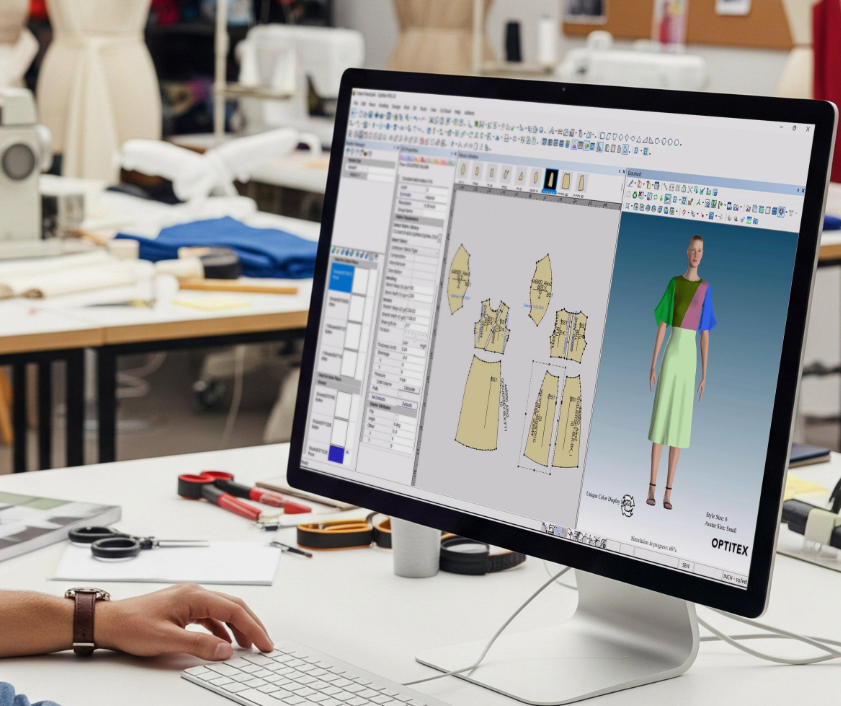
The important change occurs near the beginning.
Instead of building every digital garment manually from zero, the development team could begin with an AI-generated starting point.
Even if that starting point requires correction, significant development time could potentially be saved.
What Apparel Companies Should Watch
OmniFabric is research, not a complete replacement for today’s apparel development systems.
The technology should therefore be viewed as an indication of direction rather than an immediate production solution.
But several developments are worth watching closely:
Image-to-pattern reconstruction
Can AI reliably infer usable sewing patterns from ordinary garment photographs?
Fabric-property estimation
Can future systems infer stretch, weight, drape, stiffness, and other physical characteristics from images or limited additional information?
Integration with existing 3D apparel software
Can reconstructed garments move easily into established apparel development platforms?
Production accuracy
Can automatically generated patterns eventually reach the accuracy required for real garment manufacturing?
Tech-pack integration
Can visual reconstruction eventually connect directly with measurements, BOMs, construction details, costing, and factory instructions?
The answers to these questions will determine whether image-based 3D garment reconstruction remains primarily a visualization technology or becomes part of mainstream apparel production.
From Digital Sampling to AI-Assisted Product Development
The most interesting aspect of OmniFabric may not be the ability to create an impressive 3D garment from a photograph.
The larger development is the gradual connection of:
AI + garment images + sewing patterns + 3D simulation + apparel production data.
As these technologies improve, the boundary between design inspiration and technical product development may become much shorter.
A photograph could become a digital garment.
A digital garment could become an editable pattern.
An editable pattern could connect to fabric simulation.
And eventually, that digital information could connect directly with costing, sourcing, technical specifications, and production.
That transition will not happen overnight.
But for apparel professionals, it is worth watching carefully.
The future of digital product development may not begin with a blank pattern.
It may begin with a single photograph.
Explore Practical Apparel Product Development Resources
Apparel Production Lab connects emerging technology with practical apparel manufacturing, product development, sourcing, costing, and production knowledge.