
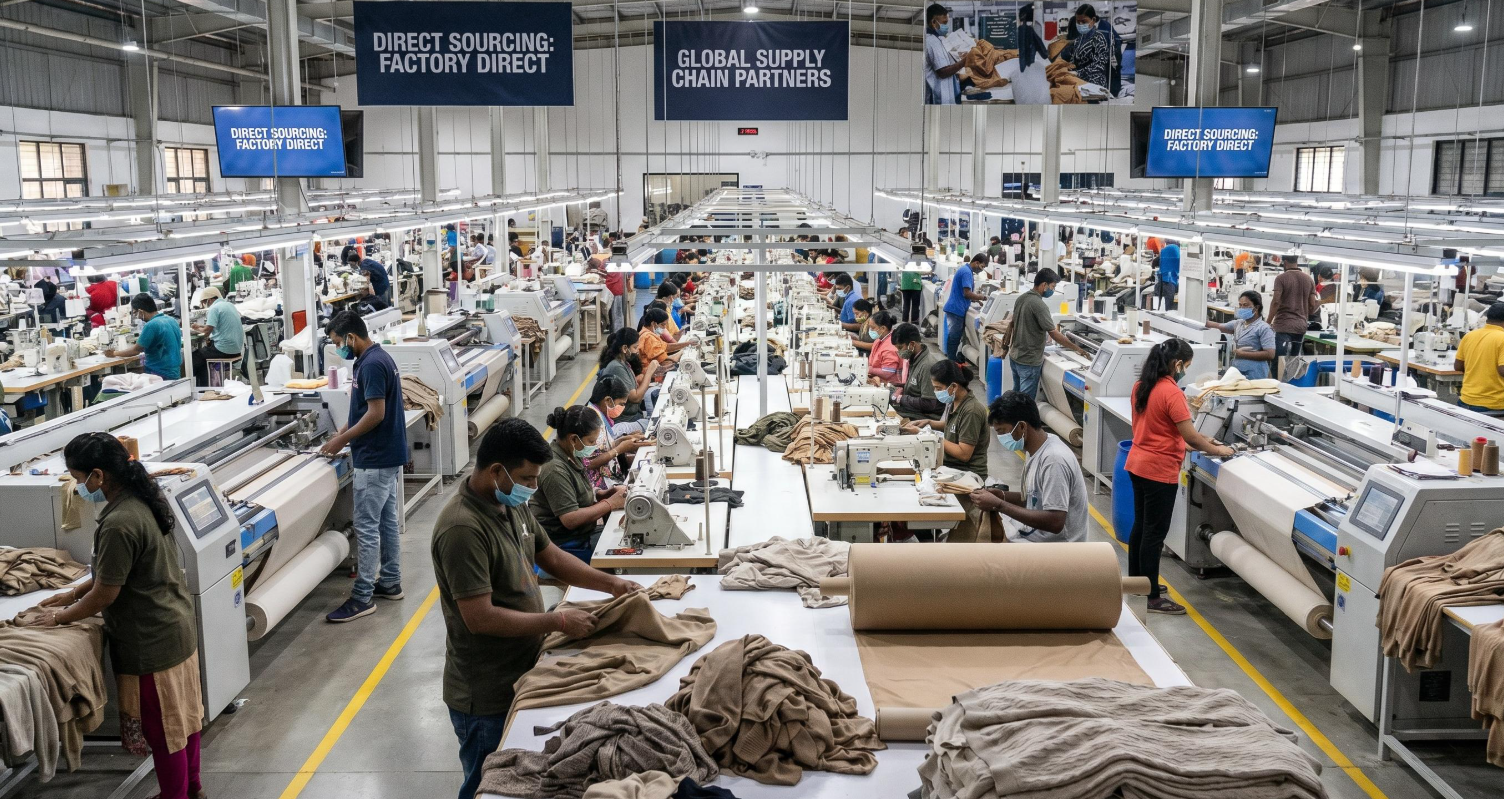
The Best Apparel Sourcing Price Is Not Just a Factory Price
Finding the best apparel sourcing price requires more than comparing factory quotations.
For decades, apparel sourcing has often started with a simple question:
Which factory can offer the best price?
That question still matters. But in today’s global sourcing environment, it is no longer enough.
A factory may quote an attractive garment FOB price, yet the final sourcing result can change dramatically once tariffs, freight, material sourcing, production efficiency, lead time, compliance requirements, geopolitical exposure, and delivery risk are considered.
The best sourcing price, therefore, is not simply the lowest number on a factory quotation.
It is the price that produces the best overall sourcing result under the buyer’s actual requirements.
Global Sourcing Has Become More Complex
The World Trade Organization’s World Trade Report 2026 describes a global trading system facing significant structural change.
Global value chains have become deeply interconnected, economic power has shifted toward emerging economies, government intervention has increased, and geopolitical tensions are affecting how companies evaluate international trade.
For apparel companies, these developments have a very practical consequence:
The sourcing decision can no longer be separated from the trade environment surrounding the factory.
Two factories may manufacture the same garment at similar quality levels and quote different FOB prices.
The lower FOB quotation may initially appear to be the obvious choice.
But what happens if that sourcing country carries a higher tariff?
What if the factory requires a larger MOQ?
What if fabric must be imported from another country?
What if the production lead time is three weeks longer?
What if freight is significantly more expensive?
What if the factory has a higher risk of quality failure or delivery delay?
Once these factors are included, the apparent price advantage may disappear.

Factory Price Is Only One Layer of Cost
A useful way to understand apparel sourcing is to separate cost into several layers.
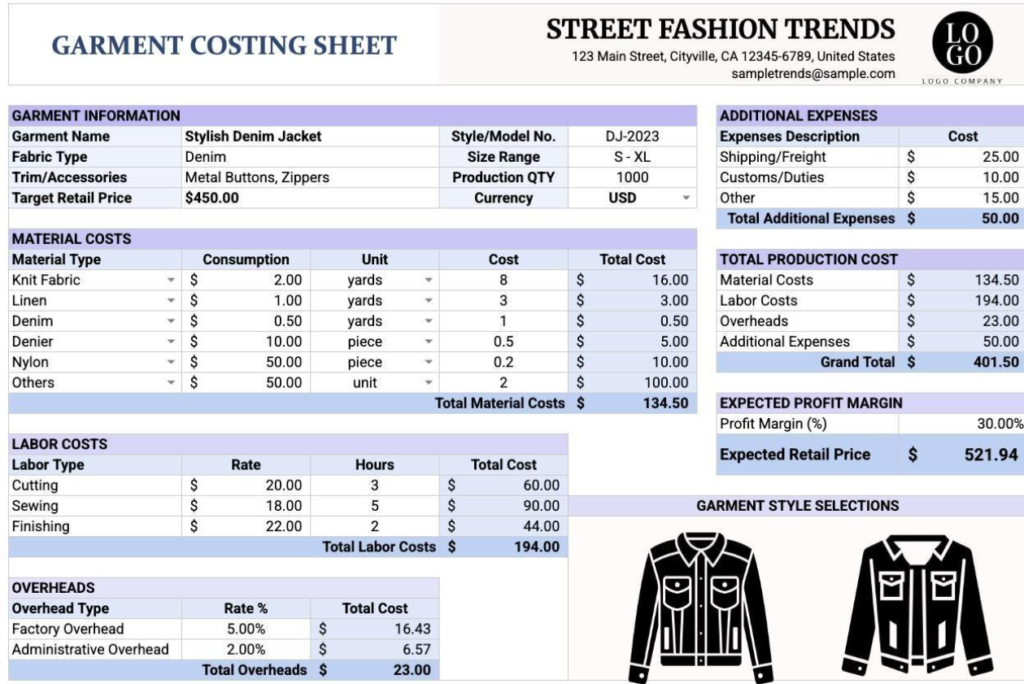
1. Manufacturing Cost
This is the cost most sourcing teams traditionally focus on.
It includes areas such as:
- Fabric and trims
- Cut-and-make cost
- Washing or finishing
- Packing
- Factory overhead
- Factory margin
These components ultimately form the garment FOB price.
But FOB is only one stage in the sourcing equation.
2. Trade and Logistics Cost
After the garment leaves the factory, additional costs begin to accumulate.
Depending on the sourcing country and destination market, these may include:
- Import duty
- Additional tariffs
- Ocean or air freight
- Insurance
- Customs clearance
- Port charges
- Inland transportation
- Warehousing and handling
A small FOB advantage can quickly disappear when these costs are added.
3. Operational Cost
Some costs never appear directly on a commercial invoice.
For example:
- Higher fabric consumption
- Poor cutting efficiency
- Rework
- Quality inspection failures
- Production delays
- Expedited freight
- Excess inventory
- Small-order surcharges
These costs can have a major impact on the profitability of an apparel program.
4. Risk Cost
Risk is increasingly becoming part of sourcing economics.
A sourcing country or supplier may expose a buyer to:
- Trade-policy changes
- Tariff uncertainty
- Political instability
- Transportation disruption
- Compliance problems
- Raw-material shortages
- Capacity constraints
- Delivery uncertainty
Risk may not have an exact dollar value when the sourcing decision is made.
But once a disruption occurs, it can become one of the largest costs in the entire order.
Compare Apparel Sourcing Price Scenarios, Not Just Factory Quotations
Consider a simplified example.
Factory A
Garment FOB: $5.00
Factory B
Garment FOB: $5.20
If price comparison stops here, Factory A wins.
But suppose Factory A has higher duty exposure, longer transit time, higher freight cost, and greater delivery risk.
After those factors are included:
Factory A Landed Cost: $6.45
Factory B Landed Cost: $6.10
The factory with the higher FOB price has become the better sourcing option.
This is why professional sourcing should compare complete sourcing scenarios rather than isolated factory quotations.
Three Useful Costing Views
Another way to improve sourcing decisions is to examine the order from different costing structures.
CMPT FOB
Under a CMPT FOB structure, the buyer supplies or drop-ships the fabric.
The factory quotation therefore focuses primarily on garment manufacturing and the costs required to move the finished garment to the FOB point.
This structure can be useful when the buyer has strong fabric purchasing power or nominated mills.
Garment FOB
Garment FOB expands the calculation by including the garment’s raw materials.
The supplier is responsible for fabric, trims, manufacturing, packing, and the other costs required to deliver the finished garment to the FOB point.
This is the structure most commonly used when comparing apparel factory quotations.
Garment LDP
Garment LDP goes further.
It considers the cost required to deliver the garment to the buyer’s specified destination.
Depending on the transaction, the calculation may include:
Garment FOB + freight + duty + applicable tariffs + logistics and local delivery costs.
For many sourcing decisions, this provides a much clearer picture of the real commercial impact.
The Lowest Price Is Not Always the Best Price
Professional sourcing is not an auction where the lowest factory quotation automatically wins.
The objective should be to identify the supplier that provides the best combination of:
Price + Quality + Delivery + Compliance + Flexibility + Risk
In some cases, the lowest FOB supplier will still be the best choice.
In other cases, paying slightly more at the factory level may reduce total landed cost or significantly reduce operational risk.
That distinction is especially important for buyers managing multiple sourcing countries.
A sourcing team should therefore ask:
Which supplier gives us the best overall commercial result for this particular order?
That is a very different question from:
Who quoted the lowest FOB?
A Better Approach to Apparel Price Sourcing
A more disciplined sourcing process can follow five steps.
Step 1 — Standardize the RFQ
Every factory should quote against the same garment specifications, materials, construction, packing method, quantities, delivery requirements, and commercial terms.
Step 2 — Collect Comparable Quotations
Quotations should be structured so that differences between suppliers can be identified clearly.
Step 3 — Normalize the Cost
Adjust for differences in material responsibility, freight, duty, tariffs, MOQ, and other commercial conditions.
Step 4 — Evaluate Supplier Capability and Risk
Price should be considered together with quality performance, capacity, compliance, delivery reliability, and sourcing-country risk.
Step 5 — Select the Best Sourcing Scenario
The final decision should be based on total commercial value—not simply the lowest quoted factory price.
From Price Comparison to Sourcing Intelligence
The apparel industry has spent decades improving factory price negotiation.
The next improvement is not simply negotiating another few cents from the FOB price.
It is building a better system for understanding where the real cost of an order comes from.
As global trade becomes more complex, sourcing professionals need to connect factory costing with trade policy, logistics, supplier capability, production risk, and final delivery economics.
The factory quotation remains important.
But it should be treated as the starting point of the sourcing decision—not the final answer.
Want to Compare the Real Cost Behind an Apparel Quotation?
Apparel Production Lab provides practical tools and professional resources for evaluating garment costing, sourcing alternatives, production requirements, and landed-cost considerations.