
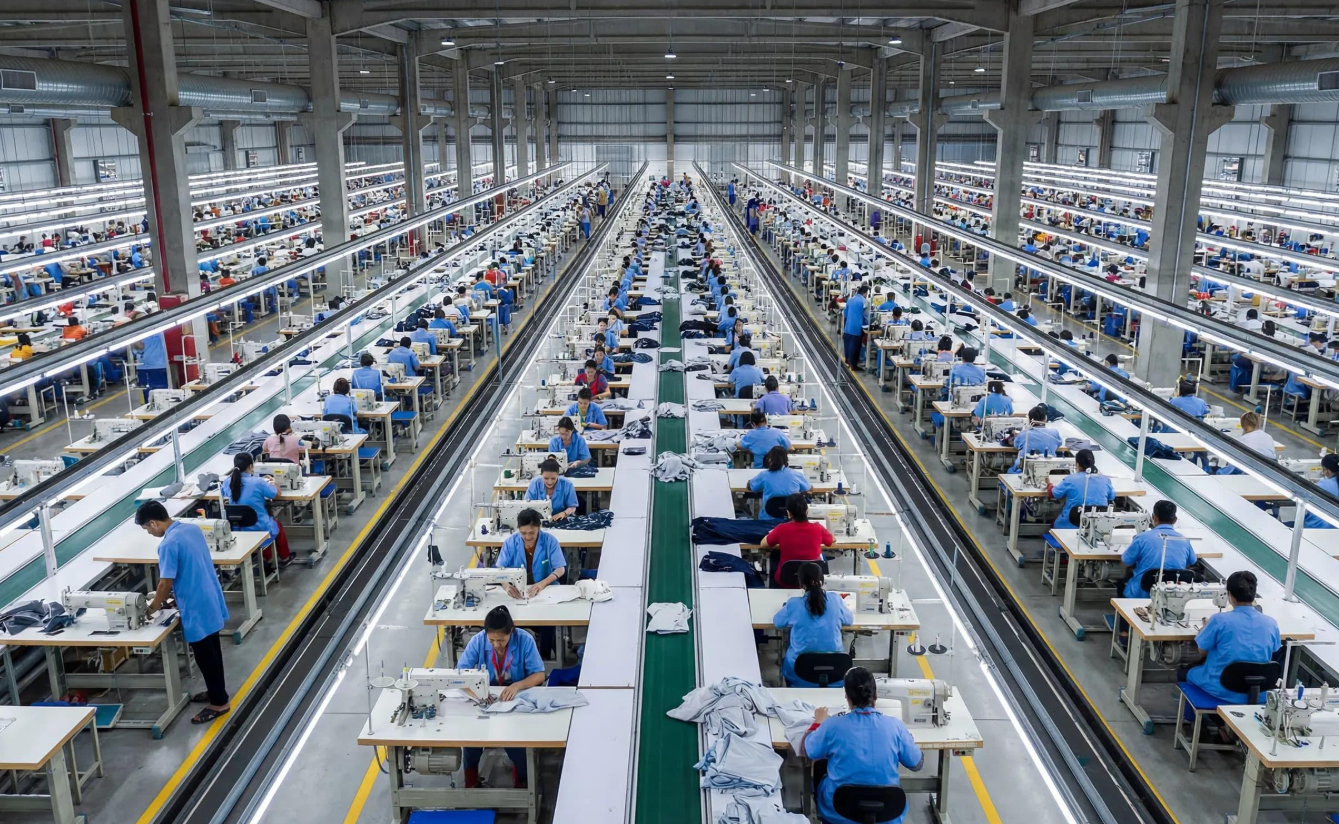
Nearshoring Is Not Just About Distance and Duty
Why apparel sourcing decisions must consider total landed cost, production capability, lead-time reliability, and supply chain execution.
Introduction
Nearshoring has become an increasingly important topic in the apparel industry as brands and retailers seek shorter supply chains, faster replenishment, and reduced exposure to global trade uncertainty.
For companies serving the U.S. market, sourcing from Mexico, Central America, and the Caribbean may appear attractive because of geographic proximity and potential preferential tariff treatment.
However, being closer to the market does not automatically mean being more competitive.
A sourcing strategy built primarily around transportation distance and import duty can overlook critical factors that ultimately determine whether a production program succeeds.
The real question is not simply where a garment can be manufactured closer to the customer. It is whether that location can deliver the required product at a competitive total cost, with consistent quality, reliable capacity, and dependable execution.
Apparel nearshoring is becoming a strategic sourcing consideration as brands and retailers reassess production locations, total landed costs, and supply chain responsiveness.
1. Geographic Proximity Does Not Guarantee a Shorter Total Lead Time
One of the strongest arguments for nearshoring is reduced transportation time.
Compared with trans-Pacific ocean freight, shipments from nearby production countries may reach U.S. distribution centers much faster.
But transportation represents only one part of the overall production timeline.
A garment’s total lead time may include:
- Fabric development and approval
- Yarn and fabric sourcing
- Dyeing, printing, and finishing
- Trims and accessories procurement
- Sample development and approvals
- Cutting, sewing, and finishing
- Quality inspection and corrective actions
- Transportation and customs clearance
If a nearby garment factory depends on fabric imported from Asia, the material procurement process may offset much of the time saved in finished-garment transportation.
For example, a factory in Central America may offer a relatively short shipping time to the United States. However, if its fabric must first be sourced, manufactured, and transported from another region, the overall order cycle can remain lengthy.
The meaningful measurement is total order-to-delivery lead time—not simply the distance between the factory and the buyer.
2. Duty Advantages Must Be Evaluated Against Actual Rules of Origin
Preferential trade agreements can create important opportunities for apparel sourcing.
Programs such as the Dominican Republic–Central America–United States Free Trade Agreement (CAFTA-DR) and the United States–Mexico–Canada Agreement (USMCA) may provide preferential tariff treatment for qualifying products.
However, preferential treatment is not automatic simply because a garment is manufactured in a participating country.
Eligibility depends on the applicable product-specific rules of origin and other agreement requirements.
For many apparel products, yarn-forward requirements can significantly influence fabric and yarn sourcing decisions, although exceptions and alternative rules may apply.
A factory may offer attractive sewing costs, but the garment may not qualify for preferential treatment if its materials or manufacturing processes fail to satisfy the relevant origin requirements.
This creates a practical sourcing challenge.
Buyers must evaluate not only where garments are assembled but also where yarns, fabrics, and other qualifying components originate, and whether the required documentation and compliance procedures can be maintained.
Duty savings should be treated as a verified sourcing advantage—not an assumption based on country of manufacture.
3. Total Landed Cost Matters More Than Factory FOB Price
Comparing factory FOB prices alone can produce misleading sourcing conclusions.
A lower sewing or garment manufacturing price does not necessarily result in a lower cost at the buyer’s warehouse.
For a practical costing comparison, explore our Garment Costing Calculator to better understand how manufacturing and sourcing costs influence pricing decisions.
A meaningful comparison should consider the full landed-cost structure, including:
- Fabric and material costs
- Cutting, sewing, and finishing costs
- Packaging and compliance requirements
- Inland transportation and export handling
- International freight and insurance
- Import duties and applicable fees
- Customs clearance and destination charges
- Inventory carrying costs and operational risks
Nearshoring may reduce transportation expenses, inventory exposure, or replenishment requirements. Yet those savings must be weighed against differences in material availability, manufacturing costs, production efficiency, and factory capability.
The cost advantage may also vary by product category.
A relatively basic garment with stable demand and large production quantities may favor one sourcing region, while a fashion-sensitive product requiring frequent replenishment may favor another.
The most competitive sourcing location is the one that delivers the best total commercial outcome—not necessarily the lowest quoted FOB price.
4. Production Capability and Material Availability Determine Real Competitiveness
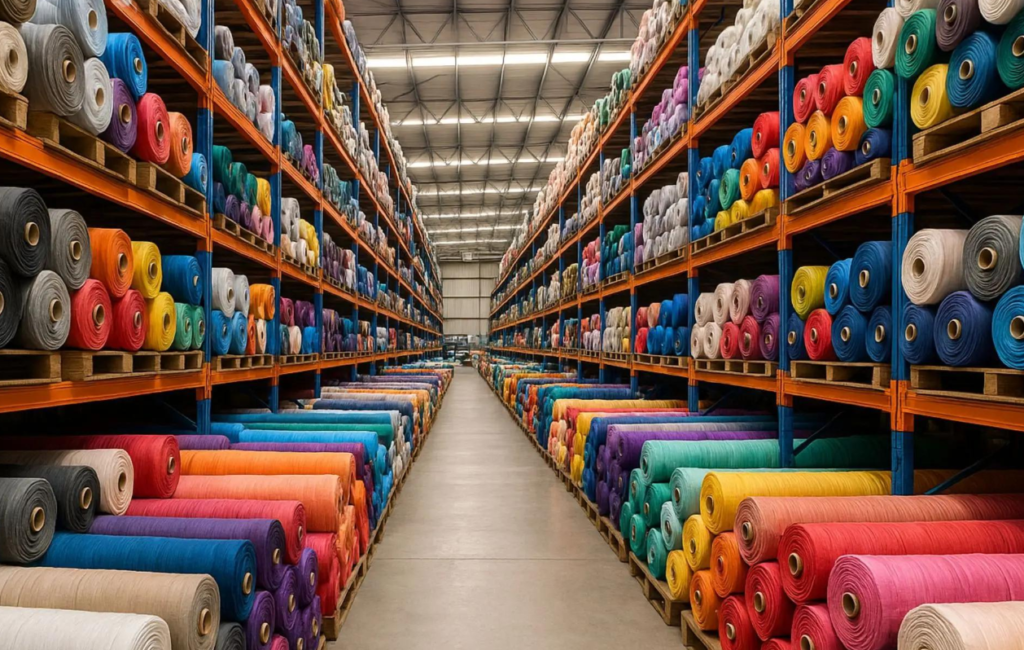
Not every sourcing region offers the same manufacturing ecosystem.
A competitive apparel production location requires more than sewing factories.
It also depends on access to reliable supporting capabilities, such as:
- Yarn and fabric mills
- Dyeing, printing, and finishing facilities
- Trims and packaging suppliers
- Washing and special-process facilities
- Testing laboratories and quality services
- Technical development and production management expertise
The availability of these capabilities can influence both cost and lead time.
A factory with strong sewing operations may still face limitations when developing garments that require specialized fabrics, performance finishes, complex construction, or specific machinery.
Likewise, insufficient local material capacity can create dependence on imported inputs, increasing planning complexity and potentially limiting production flexibility.
For sourcing teams, factory selection must therefore include an assessment of the broader manufacturing infrastructure supporting each product category.
Nearshoring competitiveness depends on the strength of the production ecosystem, not just the location of the sewing facility.
5. Production Flexibility and Replenishment Can Change the Economics
One of the most valuable potential benefits of apparel nearshoring is the ability to respond more quickly to changing market demand.
For products with uncertain demand, shorter replenishment cycles may reduce the need for large initial commitments.
This can create opportunities to:
- Reduce initial order quantities
- Replenish successful styles more quickly
- Limit excess inventory
- Respond to seasonal demand changes
- Improve coordination between sales and production
- Reduce exposure to markdowns and obsolete inventory
However, these benefits depend on the actual operating capabilities of the factory and its suppliers.
A nearby factory with limited available capacity, long fabric procurement cycles, or inflexible minimum order quantities may not provide the responsiveness that buyers expect.
In other words, geographic proximity creates an opportunity for flexibility, but production planning and supplier capability determine whether that opportunity can be realized.
For some product categories, improved inventory performance may justify a higher manufacturing cost.
For others, stable demand and predictable production schedules may continue to favor established offshore sourcing programs.
The correct decision depends on the product’s commercial characteristics and supply chain requirements.
6. Quality, Compliance, and Execution Remain Critical
Shorter transportation distance cannot compensate for weak production management.
Reliable sourcing requires disciplined execution throughout the manufacturing process.
Key considerations include:
- Factory capability assessment
- Production planning and milestone control
- Material approval and incoming inspection
- In-line and final quality control
- Capacity and work-in-process monitoring
- Corrective action management
- Shipment readiness and documentation
- Social compliance and buyer-specific requirements
A nearshore supplier may offer logistical advantages, but those advantages can disappear when production delays, quality failures, or documentation problems occur.
For this reason, buyers should evaluate the supplier’s actual operational performance rather than relying primarily on quoted lead times or geographic location.
Consistent execution is particularly important when sourcing strategies depend on frequent replenishment and shorter delivery cycles.
A shorter supply chain is valuable only when it is also a reliable supply chain.
Effective production management also requires clear milestone tracking and reliable work-in-process visibility throughout the manufacturing cycle.
7. A Practical Framework for Evaluating Apparel Nearshoring Opportunities
Instead of treating nearshoring as a simple replacement for offshore sourcing, apparel companies should evaluate each sourcing opportunity using a structured comparison.
A practical assessment should address six questions:
1. Product suitability: Does the region have the manufacturing expertise, machinery, and supporting processes required for the product?
2. Material sourcing: Are suitable fabrics and trims available locally or regionally, and what is the impact of imported materials?
3. Trade eligibility: Does the product qualify for applicable preferential tariff treatment under the relevant rules of origin?
4. Total landed cost: How does the complete delivered cost compare with existing sourcing alternatives?
5. Lead time and flexibility: Can the supplier support realistic production schedules, smaller orders, and replenishment requirements?
6. Operational reliability: Does the factory have the quality systems, production controls, capacity, and compliance capabilities needed for consistent execution?
These questions should be evaluated together rather than independently.
A sourcing location that performs well in one area may be less competitive in another.
The objective is to identify the most suitable sourcing structure for each product and business requirement.
Conclusion: Nearshoring Should Be a Strategic Decision, Not a Geographic Assumption
Nearshoring can provide meaningful benefits for the apparel industry, particularly in transportation efficiency, replenishment responsiveness, and potential trade preferences.
But those benefits must be validated through careful analysis.
Distance and duty are important considerations, yet they represent only part of the sourcing equation.
Successful sourcing decisions require an integrated understanding of product requirements, material supply, production capability, total landed cost, lead-time performance, quality, and operational reliability.
For many apparel businesses, the strongest approach may not be a complete shift from offshore to nearshore manufacturing. It may be a diversified sourcing strategy that uses different regions according to product characteristics, demand patterns, and operational priorities.
Ultimately, nearshoring should be evaluated by what the supply chain can actually deliver—not simply by how close the factory is to the market.
Evaluate Your Sourcing Strategy Beyond FOB Price
Choosing the right apparel sourcing location requires more than comparing factory quotations or freight transit times.
Explore Apparel Production Lab’s sourcing and costing resources to evaluate total landed cost, manufacturing capability, and production requirements—or contact us to discuss a product-specific sourcing assessment.