
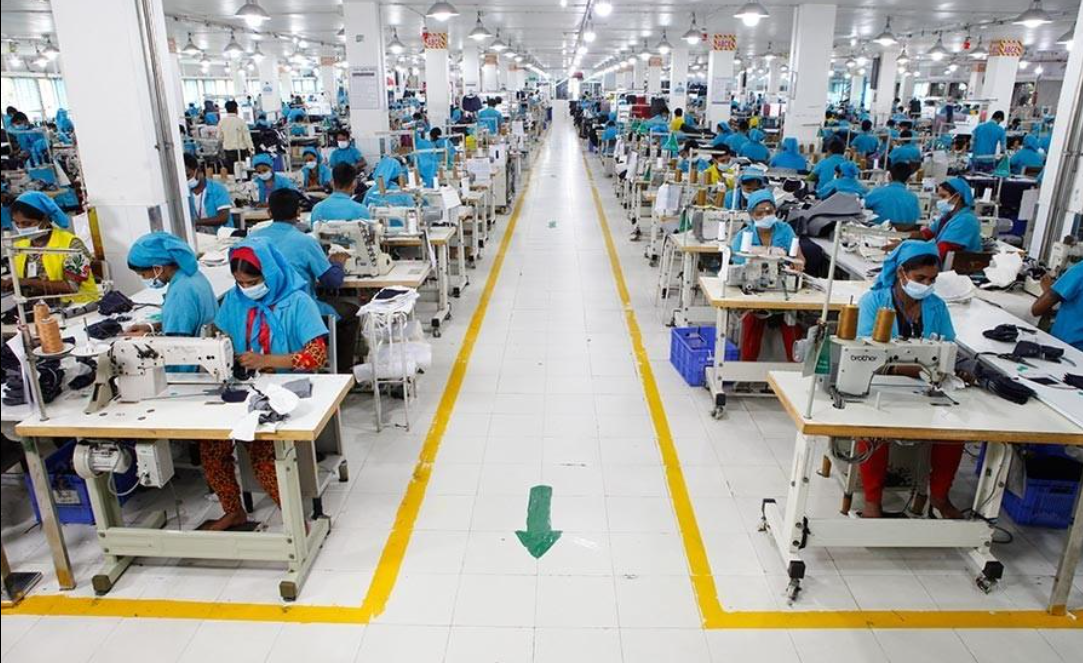
The Bangladesh garment energy crisis is highlighting a growing production and sourcing risk for the global apparel industry.
Bangladesh’s garment industry is facing a reminder of an often-underestimated sourcing risk: a factory can have available capacity, skilled workers, competitive pricing, and confirmed orders—and still struggle to deliver if reliable energy is not available.
Recent gas and electricity shortages have disrupted production across Bangladesh’s knitwear sector. A survey by the Bangladesh Knitwear Manufacturers and Exporters Association (BKMEA), covering 134 export-oriented knitwear factories, found that 78% had partially halted production and 55% had experienced cancelled or reduced orders as a result of gas and electricity shortages.
The issue goes far beyond temporary power interruptions.
For apparel sourcing professionals, the situation demonstrates how energy reliability can directly affect production capacity, lead time, manufacturing cost, shipment performance, and ultimately buyer confidence.
Energy Disruption Quickly Becomes Production Disruption
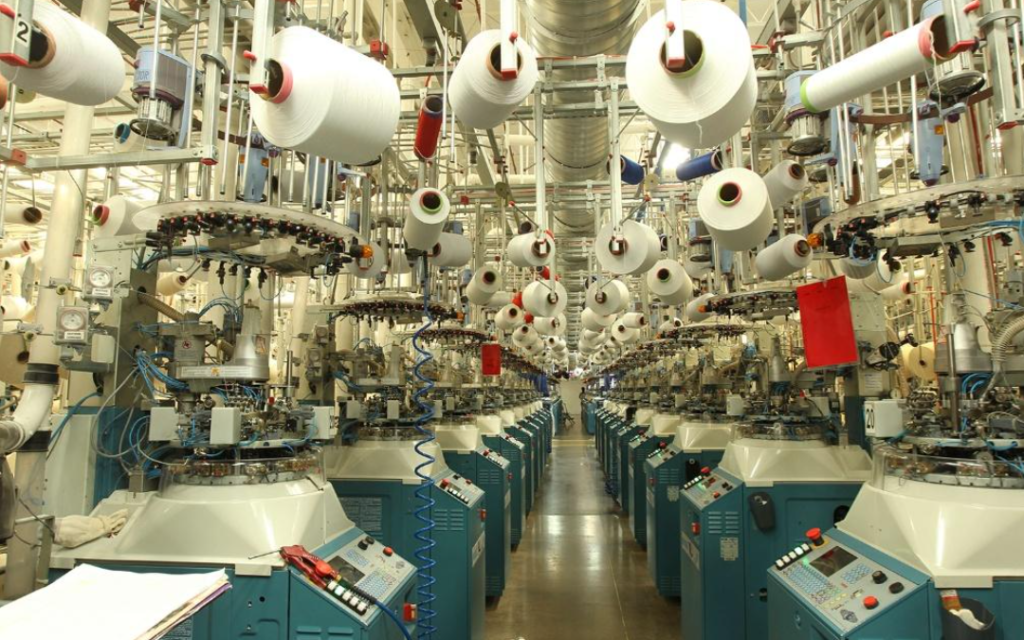
Apparel manufacturing depends on a continuous sequence of operations.
Knitting, dyeing, finishing, cutting, sewing, pressing, washing, packing, and material handling all depend—directly or indirectly—on reliable electricity, gas, steam, or other energy sources.
When energy supply becomes unstable, the effect therefore does not remain isolated to one department.
According to the BKMEA survey, approximately 90% of surveyed factories experienced electricity-related disruption and 75% were affected by gas shortages. The reported production impact was significant: knitting output declined by roughly 37–38%, dyeing production by 51%, and garment sewing production by about 40% among respondents reporting these effects.
This illustrates an important production-management principle:
Available factory capacity is not necessarily usable capacity.
A factory may technically have enough machines and workers for an order, but its effective capacity can be substantially lower when critical infrastructure is unreliable.
The Hidden Cost Appears After Production Falls Behind
Energy shortages create more than lost production hours.
Once production falls behind schedule, factories often have to compensate elsewhere.
The BKMEA survey found that 87% of respondents experienced shipment delays, while around 60% had to provide discounts to buyers. About 92% reported additional costs related to alternative fuel and a similar share reported losses in labor and working hours.
For a garment supplier, the financial chain can quickly become:
Energy shortage → Production loss → Schedule delay → Overtime or alternative energy → Expedited freight → Buyer discount → Margin erosion
In some cases, delayed production has forced manufacturers to use air freight to protect delivery dates. Reuters reported one Bangladeshi garment manufacturer paying about $50,000 to airfreight hoodie shipments to a French buyer following energy-related production delays.
For an industry already operating on narrow margins, these recovery costs can transform a profitable order into a loss.
Energy Risk Is Becoming Part of Sourcing Risk
Traditionally, sourcing evaluations concentrate heavily on factors such as:
- FOB price
- product quality
- factory capacity
- compliance
- lead time
- minimum order quantity
- material availability
- logistics capability
But energy reliability increasingly deserves a place on that list.
A factory with slightly higher FOB pricing but stable energy infrastructure may ultimately present less total sourcing risk than a lower-cost factory that regularly experiences production interruptions.
This is particularly important for programs with:
- short lead times,
- promotional delivery windows,
- seasonal products,
- high-volume orders,
- complicated wet processing,
- or significant penalties for late delivery.
In these programs, production reliability can be more valuable than a small initial FOB cost advantage.
Energy Resilience Can Become a Competitive Advantage
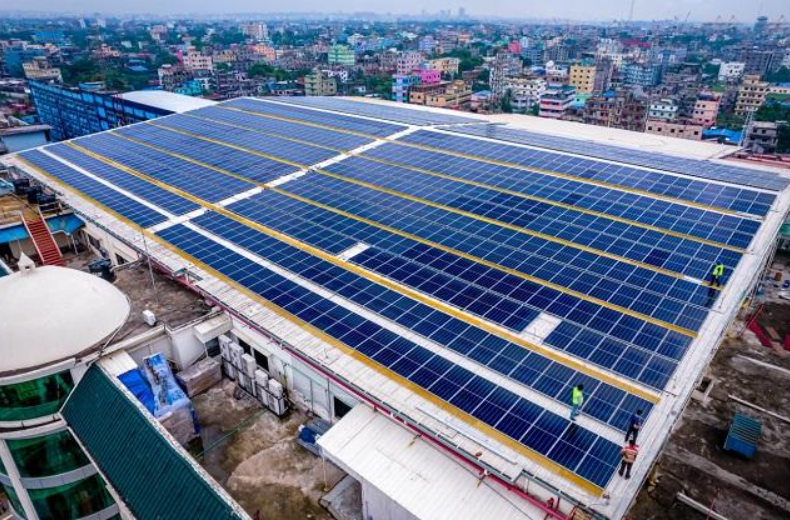
The current situation also shows that not every factory is affected equally.
Reuters highlighted 4A Yarn Dyeing, a Bangladeshi manufacturer that has diversified its energy sources. Approximately 40% of its electricity requirements are supplied through solar power, while additional requirements are supported through its own gas and diesel generation.
That diversification has allowed production to continue despite broader energy disruptions, although higher diesel costs have increased production costs by an estimated 2–3%.
The lesson for manufacturers is important.
Investments in solar generation, backup power, energy-efficient machinery, battery storage, and diversified energy sources should not be viewed only as sustainability initiatives.
They can also be production-continuity investments.
Factories capable of maintaining production during infrastructure disruptions may increasingly gain an advantage when buyers evaluate long-term sourcing partners.
Buyers Should Look Beyond Nominal Capacity
When evaluating a supplier, asking simply:
“What is your monthly capacity?”
may no longer be enough.
A more useful evaluation should include questions such as:
How much of that capacity can actually be maintained during power or gas interruptions?
Buyers and sourcing teams should increasingly understand:
- the factory’s dependence on grid electricity,
- gas availability and pressure stability,
- backup generator capacity,
- alternative fuel availability,
- solar or renewable-energy capacity,
- critical-process energy requirements,
- and contingency plans for prolonged interruptions.
This becomes particularly important for vertically integrated factories where knitting, dyeing, finishing, and garment manufacturing operate within the same production system.
An energy interruption in one upstream process can stop several downstream departments.
Suppliers Need an Energy Contingency Plan
Factories should approach energy disruption in the same way they approach other production risks.
A practical contingency plan should identify:
Critical operations — Which processes will stop first if electricity or gas becomes unavailable?
Backup capacity — How long can generators, alternative fuels, batteries, or other systems maintain production?
Priority production — Which orders should receive priority when available energy becomes limited?
Material alternatives — Can affected processes be temporarily outsourced without creating quality or compliance problems?
Delivery impact — At what point should buyers be informed that the original shipment date is at risk?
Cost exposure — What additional costs could arise from overtime, outsourcing, alternative fuel, air freight, or buyer discounts?
The earlier these risks are identified, the more options both suppliers and buyers have to protect the delivery.
Communication Matters Before the Shipment Is Late
One of the most damaging consequences of repeated production disruption is not simply the delayed shipment.
It is the loss of buyer confidence.
Nearly 89% of factories surveyed by BKMEA said they faced a risk of losing buyer confidence because of the energy crisis.
Factories sometimes wait too long before communicating a production problem because they hope to recover the schedule internally.
That approach can create an even larger problem.
A buyer informed early may still have several options:
- adjust the production sequence,
- approve partial shipment,
- modify the delivery window,
- shift a portion of the order,
- or coordinate alternative logistics.
Once the cargo is already late, many of those options disappear.
Good production management therefore requires early visibility, not simply late explanation.
What the Bangladesh Garment Energy Crisis Means for Global Sourcing
Bangladesh remains one of the world’s most important apparel manufacturing bases, and the present disruption should not be interpreted as a reason to abandon the country.
Instead, it provides a broader lesson for global sourcing.
Supply-chain risk is no longer limited to labor, materials, freight, tariffs, or geopolitical events.
Infrastructure reliability—including energy—can directly determine whether confirmed factory capacity can actually be converted into finished garments and shipped on time.
For buyers, the question is increasingly not only:
“Where can this product be made at the best cost?”
It is also:
“Where can this product be made reliably at the required cost and delivered at the required time?”
That difference is becoming increasingly important in apparel sourcing.
Practical Takeaway
For both buyers and suppliers, energy resilience should increasingly be treated as part of production planning rather than as a separate facilities issue.
Factories should understand their real operating capacity under energy constraints, while buyers should incorporate infrastructure reliability into supplier evaluation and sourcing decisions.
In apparel production, the lowest quoted cost has limited value if the factory cannot reliably convert that cost into an on-time shipment.
Need Help Evaluating Production or Sourcing Risk?
Apparel Production Lab provides practical guidance on apparel manufacturing, sourcing, production management, costing, quality, and supply-chain operations.
→ Contact Apparel Production Lab
Source Note
This article draws on reporting from Reuters published September 22, 2026, together with recent survey findings from the Bangladesh Knitwear Manufacturers and Exporters Association (BKMEA).