

U.S. apparel imports are sending an important sourcing signal as the latest market data reveals a growing gap between consumer spending and import volumes.
American consumers are still spending more on clothing than they did a year ago, but apparel import volumes are moving in the opposite direction. At the same time, import costs remain well above the levels that were common before the pandemic.
For apparel buyers, sourcing teams, and suppliers, this combination deserves attention. It suggests that the market is not simply experiencing weaker consumer demand. Instead, companies may be managing inventory and sourcing commitments more cautiously in a higher-cost and more uncertain business environment.
U.S. Apparel Import Volumes Are Moving Lower
According to Cotton Incorporated’s September 2026 Executive Cotton Update, U.S. imports of cotton-dominant apparel declined 11.4% year-over-year in July, measured in square meter equivalents (SME).
Over the most recent 12-month period, shipments were down 7.9% year-over-year.
This is significant because import volumes had briefly shown year-over-year increases in May and June before turning sharply lower again in July.
For sourcing teams and suppliers, declining import volume can translate into a more competitive order environment. Buyers may place orders more selectively, control inventory more tightly, or delay commitments while monitoring costs and demand.
Consumer Apparel Spending Is Still Growing
The import decline does not appear to be explained simply by collapsing consumer demand.
Inflation-adjusted U.S. spending on garments was 2.8% higher year-over-year in July, although the growth rate was below the 12-month average of 5.2%.
That creates an important contrast:
Consumers are still spending more on apparel, while the volume of apparel entering the U.S. market is declining.
For the apparel supply chain, that divergence may indicate tighter inventory management and greater caution in purchasing decisions rather than a straightforward contraction in consumer demand.
Import Costs Remain Elevated
Cost pressure is another important part of the picture.
The average import cost for cotton-dominant apparel was $3.71 per SME in July 2026. Cotton Incorporated reports that this is approximately 12% above the levels commonly seen before the pandemic.
Importantly, these figures do not include tariffs.
For buyers, this means the underlying cost of imported apparel remains elevated even before additional tariff expenses are considered.
For suppliers, it means that price negotiations are taking place in an environment where buyers may already be under significant margin pressure.
What This Means for Apparel Sourcing
The combination of declining import volumes, continued consumer spending, and elevated sourcing costs creates a more complicated sourcing environment.
Buyers are unlikely to evaluate suppliers on price alone.
Instead, sourcing decisions may increasingly involve questions such as:
- Can the supplier offer competitive cost without compromising quality?
- Can production quantities be adjusted as demand changes?
- Can lead times be shortened or managed more reliably?
- Can the factory respond quickly to changes in purchase orders?
- Can suppliers provide better visibility into production and delivery risk?
- Can sourcing teams reduce inventory exposure without increasing operational risk?
These capabilities become increasingly valuable when companies are trying to maintain product availability while avoiding excess inventory.
Smaller Orders and Greater Flexibility May Become More Important

When import volumes decline while consumer spending remains relatively stable, buyers may become more cautious about committing to large quantities far in advance.
That can increase the value of suppliers capable of supporting:
smaller initial orders, flexible production planning, faster replenishment, shorter decision cycles, and reliable communication.
Factories built primarily around large-volume, long-lead-time orders may therefore face greater pressure to improve flexibility.
This does not necessarily mean that large programs will disappear. It means buyers may increasingly expect suppliers to accommodate different order structures depending on market conditions.
Costing Discipline Becomes Even More Important
A higher-cost sourcing environment also makes accurate costing more important.
Suppliers need to understand not only their quoted FOB price but also the factors that can change the buyer’s total sourcing cost—including material costs, production efficiency, freight, tariffs, lead-time risk, and potential delivery disruptions.
Buyers, meanwhile, need to distinguish between a lower quoted price and a genuinely lower sourcing cost.
A supplier offering slightly higher FOB pricing but stronger delivery reliability, better production control, and greater flexibility may sometimes create better overall value than the lowest-cost quotation.
A Signal for Suppliers: Competing for Fewer Orders
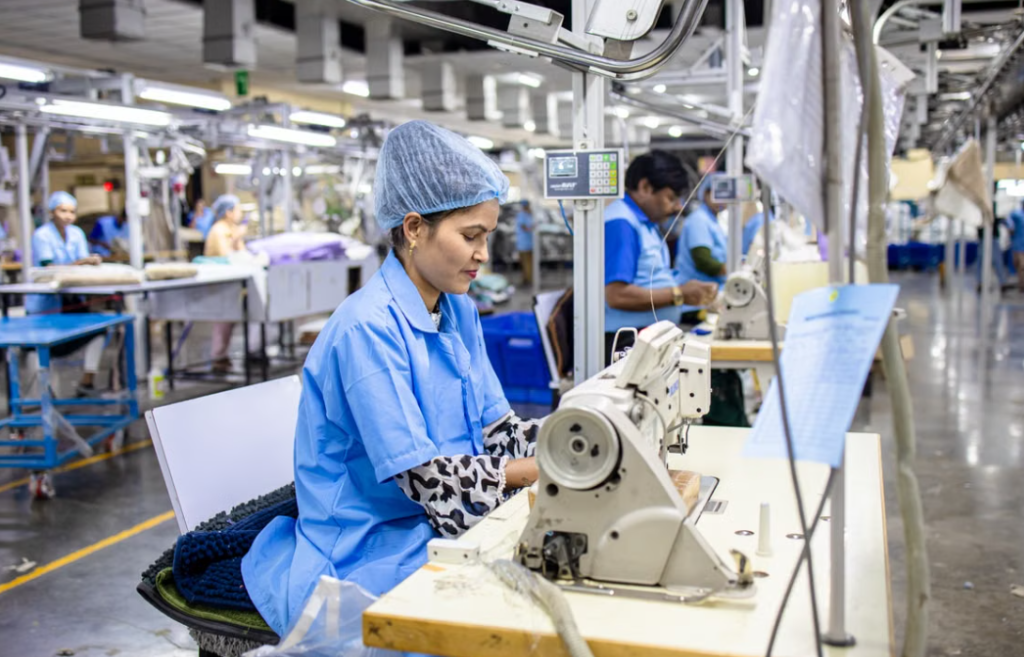
The September data also carries an important message for apparel manufacturers.
If U.S. import volumes remain under pressure, suppliers may find themselves competing for a smaller pool of available orders.
In that environment, factories should avoid relying solely on price reductions to secure business.
A stronger strategy is to demonstrate measurable operational value:
- dependable delivery performance,
- transparent production status,
- accurate costing,
- consistent quality,
- flexible capacity,
- compliance readiness,
- and rapid problem-solving.
These capabilities can help suppliers become more valuable to buyers who are managing uncertainty.
The Practical Takeaway
The September 2026 data does not point to a simple story of weak apparel demand.
Instead, it shows a market in which consumer apparel spending continues to grow while import volumes decline and sourcing costs remain elevated. Cotton Incorporated similarly notes that the divergence between consumer spending and imports may reflect greater sourcing caution in a higher-cost environment.
For buyers, the priority is increasingly to balance inventory, cost, flexibility, and supply reliability.
For suppliers, the challenge is to demonstrate that they can help buyers manage those pressures—not simply offer a lower price.
The companies that manage this environment most effectively will be those that treat sourcing as a balance between cost efficiency and operational flexibility.
Strengthen Your Apparel Sourcing and Cost Strategy
Apparel Production Lab provides practical guidance on apparel sourcing, production management, costing, quality, and supply-chain operations—helping apparel businesses make better sourcing and production decisions in changing market conditions.
→ LET’S DISCUSS YOUR SOURCING STRATEGY
Source Note: This article draws on Cotton Incorporated’s Executive Cotton Update — September 2026, published September 14, 2026, together with its September 2026 cotton market analysis.
Source link: CottonWorks — Executive Cotton Update: September 2026