
In apparel production, GSM is one of the most commonly used fabric specifications.
But it is also one of the most commonly misunderstood.
A fabric that meets the required GSM is not automatically the same fabric quality as the approved standard. This is particularly important with knit fabrics, where the finished result is influenced not only by fabric weight, but also by yarn, knit construction, knitting-machine specifications, finished width, dyeing, and finishing conditions.
GSM is therefore important—but it should never be evaluated by itself.
Understanding how GSM works together with finished width and fabric construction is also important for another reason: these variables can directly affect fabric yield, garment consumption, production quantity, and ultimately garment cost.
What Does GSM Mean in Fabric?
GSM stands for grams per square meter.
It represents the weight of one square meter of fabric and provides a practical way to compare fabric weight.
In general, a higher GSM indicates a heavier fabric per unit of area, while a lower GSM indicates a lighter fabric.
For example, a 240 GSM knit fabric contains more fabric weight per square meter than a 180 GSM fabric.
But GSM tells us how much a given area of fabric weighs. It does not, by itself, define the complete quality or construction of that fabric.
That distinction is extremely important in apparel production.
Same GSM Does Not Necessarily Mean the Same Fabric Quality
A common mistake is to assume that two knit fabrics with the same GSM must have the same quality.
They may not.
In knit fabric production, the finished fabric can be influenced by factors such as:
- Yarn type and yarn count
- Knit construction
- Knitting machine type
- Machine diameter
- Number of needles
- Machine gauge
- Finished fabric width
- Dyeing and finishing conditions
Two fabrics can therefore reach the same GSM while having differences in appearance, density, hand feel, stretch, dimensional behavior, and overall fabric character.
For this reason, specifying only a target GSM is usually not enough when the objective is to reproduce an approved knit fabric quality consistently.
The relevant construction and machine specifications should also be understood and controlled.
GSM is an important fabric specification, but GSM alone does not define knit fabric quality.
For a broader look at selecting and evaluating materials for apparel production, see Fabric Sourcing for Apparel Production: How to Choose the Right Materials.
Why Knitting Machine Specifications Matter
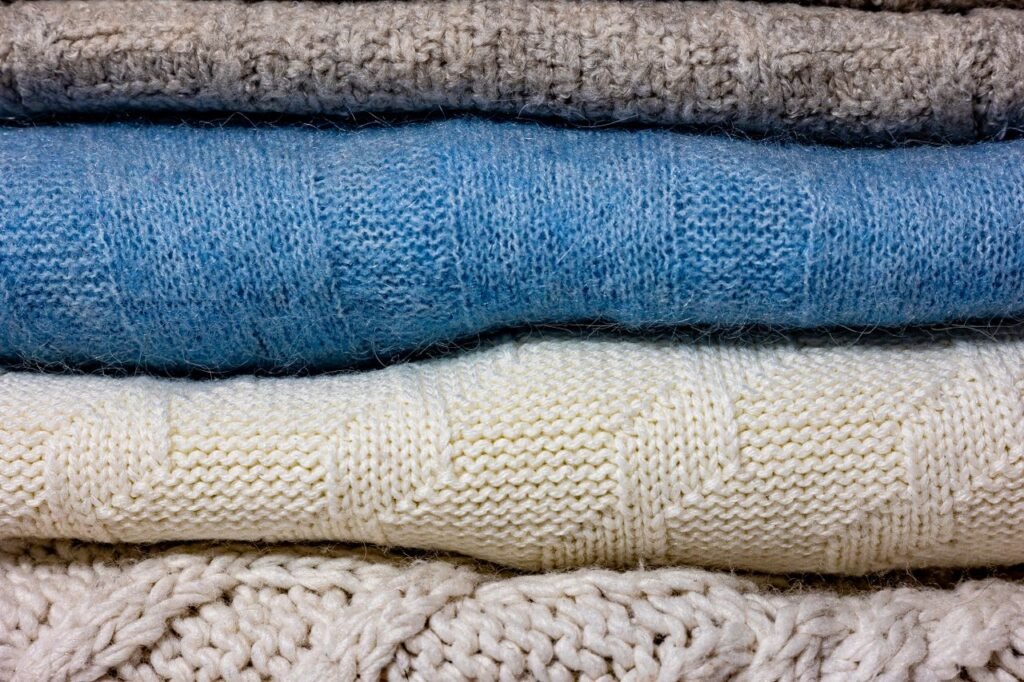
Knit fabric is created through a knitting structure, and that structure is influenced by the machine used to produce it.
Machine diameter, needle count, and gauge can affect the way loops are formed and distributed across the fabric.
This means that producing a fabric to the same GSM on a different machine setup does not necessarily guarantee that the finished fabric will behave or look exactly the same.
In normal production, an experienced fabric mill will usually select an appropriate machine and construction for the required fabric.
However, when a specific approved fabric quality must be reproduced, relying only on the instruction “make it to the same GSM” can create unnecessary risk.
The approved fabric specification should provide enough technical information for the mill to reproduce the intended construction—not merely its final weight.
GSM and Finished Width Must Be Evaluated Together
GSM becomes especially important for costing and production planning when it is considered together with finished fabric width.
This is because knit fabrics are commonly purchased and produced by weight, while garment consumption is often managed in linear yards or meters.
Consider two fabrics with the same GSM.
If one fabric finishes wider than the other, each linear yard contains a larger area of fabric and therefore weighs more.
As a result:
Wider Finished Width → More Weight per Linear Yard → Fewer Linear Yards per KG
Conversely:
Narrower Finished Width → Less Weight per Linear Yard → More Linear Yards per KG
This relationship can have a direct effect on the amount of usable fabric available for garment production.
Why the Same Fabric KG Can Produce Different Yardage
Suppose a knit fabric order is produced to the correct GSM and the mill delivers the expected total kilograms.
It may appear that the fabric requirement has been met.
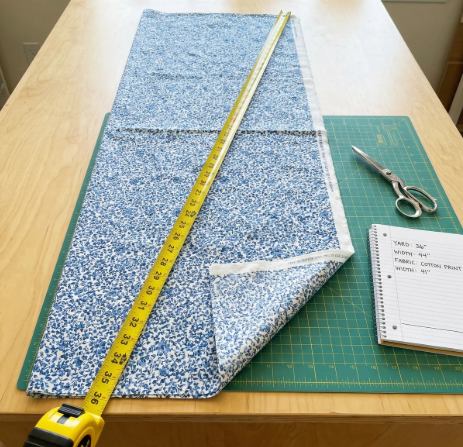
But if the finished width differs from the planned width, the total linear yardage or meterage can also differ.
If the fabric finishes wider than planned, the same total kilograms will generally produce fewer linear yards.
If it finishes narrower, the same kilograms will generally produce more linear yards.
This is an important reason why fabric quantity should not be evaluated only by total weight.
In practical terms:
Fabric KG + GSM + Finished Width → Linear Fabric Yield
And linear fabric yield is directly connected to the amount of fabric available for garment production.
The Impact on Garment Production Quantity
The garment factory does not produce garments simply from kilograms of fabric.
Patterns must be laid out across a usable fabric width, and each garment requires a certain amount of linear fabric based on the marker and consumption.
Therefore, an unexpected change in finished width can affect whether the delivered fabric quantity is sufficient to produce the required garment order.
For example, if the fabric is purchased based on an expected GSM, width, and yield, but the bulk fabric finishes wider while maintaining the same GSM, the resulting linear yardage may be lower than planned.
The factory may then discover that the delivered kilograms do not provide enough linear fabric to complete the required garment quantity.
That shortage can lead to additional fabric production, production delays, or increased cost.
A narrower fabric may provide more linear yards per kilogram, but that does not automatically mean the result is better. A narrower usable width can also affect marker efficiency and garment consumption.
For this reason, finished width and garment consumption must be evaluated together rather than assuming that more yards always means more garments.
How GSM Affects Fabric Cost per Yard
The same relationship also affects costing.
Many knit fabrics are quoted in price per kilogram, while garment costing may require understanding the fabric cost per linear yard or meter.
A price of $5.00/kg does not tell you the cost of one yard of fabric until you also know how much that yard weighs.
That depends primarily on GSM and finished width.
As GSM increases, the weight of each linear yard increases when width remains constant.
As finished width increases, the weight of each linear yard also increases when GSM remains constant.
Therefore:
Fabric Price/KG + GSM + Finished Width → Fabric Cost/Linear Yard
This is why comparing knit fabric quotations only by price per kilogram can sometimes be misleading.
Two fabrics may have the same price per kilogram but different costs per linear yard—and therefore different fabric costs per garment.
From Fabric Price to Garment Cost
The commercial impact becomes clearer when the entire costing chain is considered:
Fabric Price/KG → GSM & Finished Width → Linear Yield → Cost/Yard → Garment Consumption → Fabric Cost/Garment
A change at the fabric-specification level can therefore travel all the way through to the garment cost.
It can also affect the total kilograms required to complete an order.
This is particularly important when comparing alternative fabric qualities. A fabric that appears inexpensive based only on price per kilogram may not necessarily provide the lowest fabric cost for the garment.
GSM, finished width, yield, and garment consumption need to be evaluated together.
For a broader understanding of how fabric and other production variables affect garment cost, see Garment Costing: What Determines the Cost of Apparel Production?
Do Not Wait Until the Entire Bulk Is Finished
Another important part of knit fabric control is when the bulk result is evaluated.
For a larger production order, one practical method is to process the first production lot through dyeing and finishing before committing the remaining bulk under exactly the same conditions.
The first finished lot can then be evaluated against the approved fabric standard.
Depending on the fabric and specification, the review may include:
- GSM
- Finished width
- Appearance
- Hand feel
- Color
- Shrinkage or dimensional stability
- Other required physical or performance characteristics
This is important because the final fabric condition cannot always be judged accurately from greige fabric alone.
Dyeing and finishing can affect the final width, weight, appearance, hand feel, and dimensional behavior of the fabric.
If the first finished production lot shows an unacceptable difference, the mill has an opportunity to investigate and make appropriate adjustments before the same issue is repeated throughout the entire bulk.
For very small orders this approach may not always be practical, but for larger programs it can be an effective production-risk control.
For more on managing fabric and trim materials through bulk production, see Apparel Fabric & Trim Management: From Approval to Production.
Approved GSM Is a Target—The Finished Fabric Is the Real Result
A technical specification is necessary to communicate the intended fabric.
But production management should ultimately verify the actual finished result.
If a fabric meets the specified GSM but finishes at the wrong width, produces an unacceptable hand feel, behaves differently from the approved fabric, or creates an unexpected yield, simply saying that “the GSM is correct” does not resolve the production problem.
The real question is:
Does the finished bulk fabric reproduce the approved quality and provide the quantity, performance, and yield required for garment production?
That is a much more useful standard for production management.
Use GSM as Part of a Fabric System
GSM should therefore be treated as one part of a larger fabric specification.
For knit fabrics, a practical evaluation may need to consider:
GSM + Yarn + Construction + Machine Specification + Finished Width + Dyeing & Finishing + Shrinkage + Garment Consumption
The exact technical requirements will depend on the fabric and product.
But the management principle remains the same:
Do not approve or cost a knit fabric based on GSM alone.
Understand what produces that GSM, how the fabric finishes, how much linear fabric the weight actually yields, and how that result affects garment production.
Compare GSM, Width, Yield, and Cost
Apparel Production Lab’s Knit Fabric Costing Calculator can be used to compare different knit fabric scenarios side by side.
By changing GSM, finished width, fabric price, garment consumption, and processing-loss assumptions, the calculator helps show how fabric specifications can affect:
- Weight per linear yard
- Yield per kilogram
- Fabric cost per yard
- Required production input
- Total fabric cost
This makes it easier to evaluate a fabric not simply by its price per kilogram, but by its effect on the actual garment order.
Final Takeaway
GSM is one of the most useful measurements in knit fabric production—but it is not a complete definition of fabric quality.
The same GSM can be produced under different construction and machine conditions. The same GSM can also produce different linear yields when finished width changes.
Those differences can ultimately affect fabric availability, garment production quantity, and cost.
The better question is therefore not simply:
“Is the GSM correct?”
It is:
“Does the finished fabric meet the approved quality, width, performance, yield, and production requirements?”
That is the point at which GSM becomes more than a number on a fabric specification—it becomes part of effective apparel production management.