

Apparel supply chain management is much more than moving garments from a factory to a customer.
Before a finished garment can be shipped, fabrics and trims must be developed, approved, produced, transported, received by the garment factory, converted into finished products, inspected, packed, and delivered.
At the same time, information must move through the supply chain just as effectively as the physical product.
Suppliers, factories, production teams, quality teams, logistics providers, and customers need accurate information about approvals, materials, production status, problems, decisions, and delivery dates.
This is why effective apparel supply chain management depends on one factor above all others:
Communication.
What Is the Apparel Supply Chain?
The apparel supply chain connects every organization and activity required to transform a product concept into finished goods delivered to the customer.
A simplified flow may look like this:
Fabric & Trim Suppliers → Material Development & Approval → Material Production → Drop-Ship / Material Transportation → Garment Factory → Garment Production → Inspection & Packing → Finished Goods Shipment → Customer Warehouse
In global apparel production, these activities may take place in several countries and involve multiple independent companies.
A fabric mill may be located in one country, trim suppliers in another, garment manufacturing in a third, and the final customer thousands of miles away.
The challenge is not simply managing each individual supplier.
The challenge is making sure all of them work together toward the same production and delivery requirement.
Supply Chain Management Is Also Information Management
Physical materials cannot move effectively if the information controlling them is inaccurate or late.
Throughout the supply chain, teams may need to exchange information about:
- Purchase orders
- Material specifications
- Color and trim approvals
- Sample approvals
- Material production status
- Material ETD and arrival dates
- Factory production schedules
- Quality results
- Inspection status
- Shipping schedules
- Documentation
- Changes and corrective actions
A fabric supplier may manufacture the correct material, but if the garment factory receives incorrect arrival information, production planning can still fail.
A factory may have enough capacity, but if an approval arrives late, that capacity may no longer be available when the material finally arrives.
For this reason, information flow and product flow must be managed together.
Why Communication Is the Core of Supply Chain Management
Problems are unavoidable in apparel production.
Fabric can be delayed. A color may fail approval. Trims may arrive late. A factory may experience a capacity problem. Quality issues may require correction. A vessel schedule may change.
The existence of a problem does not necessarily determine the final outcome.
How quickly and accurately the problem is communicated often does.
A problem identified early may allow time to change a material shipment, adjust a factory schedule, divide a delivery, use an alternative supplier, or revise transportation.
The same problem discovered too late may result in missed production, air freight, late delivery, additional cost, or lost sales.
A useful principle is:
A problem communicated early can often be managed. A problem communicated late can become a production crisis.
Good Communication Is More Than Reporting a Problem
Good supply chain communication should provide three things:
Accurate Information → Early Visibility → Clear Responsibility
It is not enough to send a message saying:
“The fabric is delayed.”
Production management needs to know why it is delayed, how long the delay may be, what can be done, which other activities will be affected, and who needs to take action.
Most importantly, the customer should not simply receive a problem without enough information to make a decision.
This leads to a practical problem-solving process.
A Practical Supply Chain Problem-Solving Process
1. Identify the Root Cause
The first step is to understand exactly what happened.
Why is the material late?
Was the problem caused by raw material availability, color approval, production capacity, quality failure, transportation, documentation, or something else?
A delay notice by itself is not enough information.
Understanding the root cause helps determine whether the problem can be corrected and whether the proposed recovery plan is realistic.
2. Determine the Preferred Solution
Once the cause is understood, identify the solution that best protects the original production and delivery plan.
The first question should be:
Can the original requirement still be achieved?
This may require the supplier, factory, logistics provider, or production team to change priorities or take corrective action.
If the original plan can still be protected realistically, that is generally the preferred direction.
3. Develop Alternative Options
Sometimes the original plan is no longer achievable.
At that point, the responsibility of supply chain management is not simply to report that the plan has failed.
Alternative solutions should be developed.
Depending on the situation, options might include changing material timing, partial material delivery, splitting production, adjusting factory allocation, changing transportation methods, revising shipment timing, or evaluating an alternative source.
The appropriate solution will depend on the product and circumstances.
4. Evaluate the Impact of Each Option
Every alternative creates consequences.
Before presenting an option, evaluate how it may affect:
- Material availability
- Production schedule
- Factory capacity
- Quality
- Cost
- Shipment
- Delivery date
- Customer requirements
There may also be secondary risks.
For example, an alternative material may solve a timing problem but create a quality or approval issue.
A partial shipment may protect some customer deliveries while increasing freight cost.
Moving production may protect capacity but introduce new technical or quality risks.
A useful solution therefore needs to explain both the benefit and the consequence.
5. Present the Customer With Information and Options
Once the situation and alternatives have been evaluated, the customer should receive a clear explanation.
The communication should identify:
What happened → Why it happened → What can be done → Available options → Consequences of each option
This allows the customer to make an informed business decision.
The goal should not be to send the problem upstream and ask:
“What do you want us to do?”
The production or supply chain team should first understand the situation and prepare realistic options.
Good supply chain communication does not simply report problems. It turns problems into decisions.
6. Confirm the Decision With the Supplier
Once the customer selects a direction, the decision should be communicated back to the supplier or factory.
But communication alone is not enough.
The supplier should confirm that the revised requirement is understood, achievable, and accepted.
This is especially important when the solution involves revised production dates, expedited materials, partial shipments, additional costs, or changes to the original plan.
7. Communicate the Revised Plan to All Related Parties
Once the revised plan is confirmed, all affected parties should receive the updated information.
Depending on the situation, this may include:
- Material suppliers
- Garment factory
- Merchandising team
- Production team
- Quality team
- Logistics provider
- Freight forwarder
- Customer
- Other subcontractors or service providers
The updated dates and responsibilities should also be reflected in the working production calendar or T&A.
Otherwise, different parties may continue working from different versions of the schedule.
One decision should create one updated production plan.
For more information about managing production schedules, read Apparel Production Planning & Lead Time: From PO to Warehouse Delivery.
Managing Material Suppliers
Materials are often one of the most important parts of the apparel supply chain.
Fabric and trims may require development, testing, color approval, minimum order quantities, production time, and transportation before they can reach the garment factory.
Material suppliers should therefore be managed as part of the production calendar—not as separate purchasing activities.
Important information includes:
- Approval status
- Material PO date
- Production lead time
- Quantity
- Quality status
- Planned completion
- ETD
- Transportation method
- Factory in-house date
The garment factory’s production plan depends on this information being accurate.
For more information, read Fabric Sourcing for Apparel Production: How to Choose the Right Materials.
Drop-Ship and Multi-Country Production
Global apparel production often involves materials and garments being manufactured in different countries.
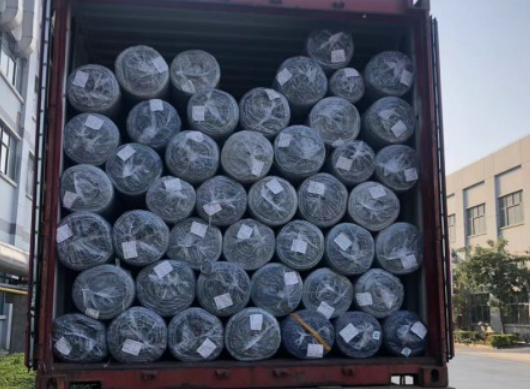
For example, fabric may be produced in one country and then drop-shipped directly to a garment factory in another.
In this situation, the material is not production-ready simply because the mill has finished manufacturing it.
The supply chain must manage:
Material Completion → Export Preparation → ETD → International Transit → Import/Customs → Factory Receiving → Material In-House
Any delay in this chain can affect the garment factory’s planned production start.
This is why production teams need visibility beyond the garment factory itself.
They need to understand what is happening upstream in the material supply chain as well.
Connecting the Supply Chain to the T&A
The T&A calendar is one of the most important tools for connecting supply chain activities.
A useful T&A should not only show target dates.
It should connect dependencies.
If fabric approval moves, bulk production may move.
If material production moves, material ETD may move.
If material arrival moves, sewing may move.
If sewing moves, inspection and shipment may move.
Supply chain management therefore requires teams to understand not only whether an individual task is late, but what that delay will affect next.
FOB, LDP and DDP Supply Chain Responsibilities
Commercial terms also affect the scope of supply chain management.
Under an FOB arrangement, the supplier’s responsibilities and the buyer’s responsibilities change at the agreed point under the applicable commercial terms.
Under LDP or DDP arrangements, the supplier or responsible party may need to manage additional activities after the goods leave the production country.
Depending on the agreement, these may involve international freight, customs, duties, destination handling, inland transportation, and final delivery.
The manufacturing process may be the same, but the scope of responsibility and visibility required across the supply chain can be very different.
This is why commercial terms should be understood before production planning begins.
For a related discussion of pricing responsibilities, read Garment Costing: What Determines the Cost of Apparel Production?
Build Alternatives Before You Need Them
Strong supply chain management also involves understanding alternatives before a crisis occurs.
Depending on the product, this may include:
- Alternative material sources
- Backup trim suppliers
- Additional production capacity
- Approved subcontractors
- Alternative shipping methods
- Different routing options
Not every order needs a complete backup supply chain.
But critical materials, difficult lead times, and high-risk production programs should be evaluated early so that the team understands where alternatives exist—and where they do not.
A backup option discovered after the problem occurs may already be too late.
Visibility Creates Control
Supply chain management cannot eliminate every production problem.
Its purpose is to create enough visibility to recognize problems early and enough coordination to respond effectively.
A strong apparel supply chain provides visibility into:
Materials → Approvals → Production → Quality → Logistics → Delivery
When information moves accurately between the parties responsible for those activities, decisions can be made earlier and with a clearer understanding of their consequences.
Without that visibility, teams are often reacting to problems after their available options have already disappeared.
The Supply Chain Is Only as Strong as Its Communication
Apparel production may involve many companies, countries, and individual responsibilities, but the customer ultimately receives one product on one required delivery date.
That means the supply chain must operate as one connected system.
Materials need to move.
Production needs to move.
Information needs to move.
And when the original plan changes, the decision and revised plan need to move through the entire supply chain as well.
That is why communication is not simply part of apparel supply chain management.
It is what connects the supply chain together.
Need Help With Apparel Supply Chain Management?
Apparel Production Lab provides practical consulting for global sourcing, supply chain management, production planning, factory coordination, costing, quality control, and apparel manufacturing.
Whether you are coordinating suppliers across multiple countries, managing material and production delays, evaluating alternative sourcing options, or trying to improve visibility across your production process, we can help identify risks, evaluate options, and build a more manageable production plan.