
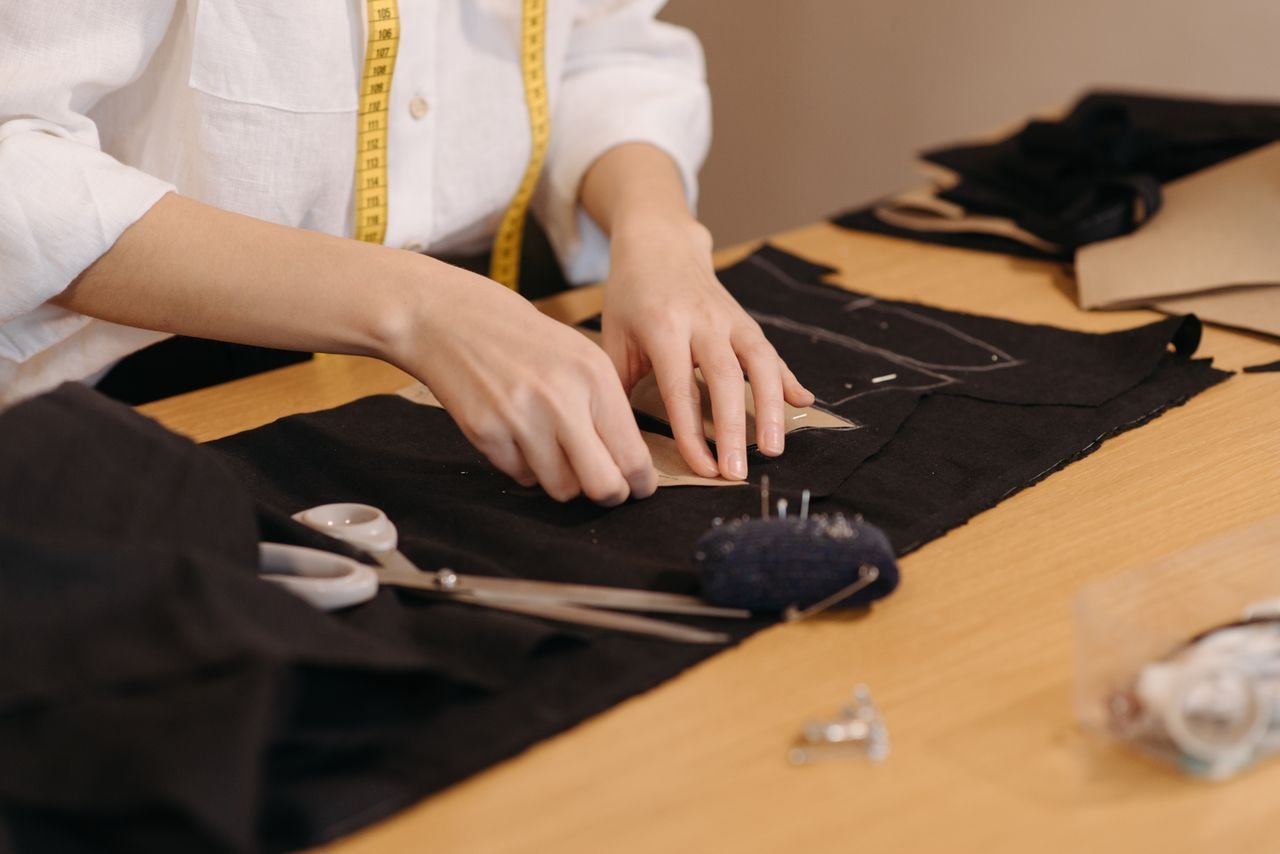
A garment pattern changes throughout product development.
Fit comments may change measurements. Construction may be revised. Garment balance may need correction. Customer comments may require another pattern adjustment.
For this reason, the last pattern created during development should not automatically be treated as the production pattern.
The real objective is to establish a pattern that reflects the final approved garment and can reliably reproduce that garment in bulk production.
A practical process is:
DEVELOPMENT PATTERN → FIT SAMPLE → FIT COMMENTS → PATTERN REVISION → PP SAMPLE → PP APPROVAL COMMENTS → FINAL CORRECTIONS → PRODUCTION PATTERN → REFERENCE SAMPLE → VERIFICATION → PRODUCTION RELEASE
Pattern management is therefore not simply pattern making.
It is the process of controlling changes until the approved garment becomes a reproducible production standard.
Development Patterns Are Working Patterns
During development, a pattern is expected to change.
The first pattern may be created from:
- Technical sketches
- Measurement specifications
- Existing blocks
- Reference samples
- Construction requirements
- Customer instructions
- Other product information
The first sample then provides physical information that cannot always be fully understood from a drawing or measurement chart.
After fitting, the pattern may need further adjustment.
This cycle may happen several times:
PATTERN → SAMPLE → FIT → COMMENTS → PATTERN REVISION → NEW SAMPLE
Therefore, a development pattern should be treated as a working technical reference—not automatically as the final production standard.
1. Pattern Changes Should Follow the Garment Decision
A pattern should not be changed simply because a new number appears in a fit comment.
Before making the correction, understand what changed in the garment.
A useful review sequence is:
CONSTRUCTION → MEASUREMENTS → SILHOUETTE / BALANCE → PATTERN
A construction change may require more than a measurement adjustment.
A measurement change may affect garment balance.
A silhouette change may require several related pattern corrections.
The pattern should therefore represent the complete approved garment direction rather than a series of isolated numerical changes.
For more information about reviewing fit comments before pattern correction, read Garment Fit Approval: How to Manage Fit Comments Before Production.
2. Keep Pattern Revisions Controlled
As fitting progresses, several pattern versions may exist.
Without control, the risk is obvious:
The sample room may use one version.
The pattern team may be working on another.
A factory may retain an earlier file.
A later sample may be made from the wrong revision.
For this reason, pattern revisions should be identifiable.
Depending on the system used, useful controls may include:
- Style number
- Pattern version or revision
- Date
- Size
- Pattern-piece identification
- Relevant change notes
- Approval status
The exact method can vary.
What matters is that the team can distinguish:
WORKING PATTERN
from:
CURRENT APPROVED / PRODUCTION PATTERN
3. A Pattern Revision Needs Traceability
When a pattern is changed, the team should be able to understand why.
Was it changed because of:
- Buyer fit comments?
- Construction correction?
- Measurement change?
- Balance correction?
- Material behavior?
- Production requirement?
- Another approved change?
This traceability becomes particularly important after several rounds of fitting.
If a problem appears later, the question is not only:
“Which pattern was used?”
It may also be:
“Why was this part of the pattern changed?”
Keeping the relationship between comments and pattern revisions makes later investigation much easier.
4. The Sample and Pattern Should Develop Together
A pattern should not be managed as a technical file completely separate from the garment it produces.
The sample provides physical evidence of what the pattern actually creates.
Therefore:
PATTERN ↔ SAMPLE
should remain connected throughout development.
A pattern may appear technically correct on paper or in a CAD system, but the garment may reveal a problem in:
- Fit
- Balance
- Shape
- Construction
- Drape
- Appearance
- Measurement
The physical garment is an important verification of the technical pattern.
For more information about how samples are developed and approved before production, read Garment Sampling Process: From First Sample to Production Approval.
5. Two Fit Samples Can Create a Reliable Reference
One practical approach during fit development is to make two fit samples from the same pattern and production conditions.
Before submitting one sample to the customer, compare the two.
Confirm that they represent the same standard in areas such as:
- Construction
- Measurements
- Workmanship
- Shape
- Balance
- Material
- Garment details
The purpose is important.
One sample may go to the customer while the second remains with the production or development team as a reference.
But simply making two samples does not guarantee that they are equivalent.
A duplicate sample is useful as a reference only when both samples have first been verified to represent the same standard.
This helps ensure that both sides are discussing the same garment during fitting.
6. Record the Sample Details Before Submission
Before the fit sample is submitted, relevant details should be recorded.
The measurement specification should reflect the actual sample where applicable, and other important observations should be documented.
This creates a stronger connection between:
SAMPLE ↔ SPECIFICATION ↔ PATTERN
Later, when customer comments are received, the production team can compare those comments with a known reference rather than relying on memory.
This is particularly useful when a sample is physically with the customer and cannot be examined again immediately by the production team.
7. PP Approval Is a Major Pattern-Control Point
The PP sample represents an important transition between development and production.
When PP approval comments are received, the production team should identify whether additional pattern changes are required.
A PP approval may still include comments such as:
- Measurement correction
- Shape adjustment
- Construction correction
- Placement adjustment
- Minor fit correction
- Other final requirements
Therefore:
PP APPROVED
should not automatically mean:
USE THE EXISTING PATTERN WITHOUT FURTHER REVIEW
The approval comments must first be examined and any required changes incorporated.
8. Apply the PP Approval Comments to the Production Pattern
Once the customer’s PP approval comments are understood, the required corrections should be made.
At this point, the pattern moves from development toward the final production standard.
A practical flow is:
PP SAMPLE
→ PP APPROVAL COMMENTS
→ REVIEW REQUIRED CHANGES
→ APPLY CORRECTIONS
→ COMPLETE PRODUCTION PATTERN
The important point is that the production pattern should represent the approved result, including applicable final comments.
Not merely the pattern that happened to be used to make the submitted PP sample.
9. Do Not Stop at the Corrected Pattern
This is one of the most important controls in the process.
After the final changes are entered into the production pattern, do not assume that everything is correct simply because the pattern was technically updated.
Make a physical reference garment where appropriate and verify the result.
The flow becomes:
PATTERN CORRECTION → REFERENCE SAMPLE → PHYSICAL VERIFICATION
Why?
Because entering the requested correction and producing the expected garment are not necessarily the same thing.
A corrected pattern should not be considered production-ready only because the requested changes were entered. The changes should be verified in the garment they actually produce.
10. Use the Reference Sample to Verify the Final Changes
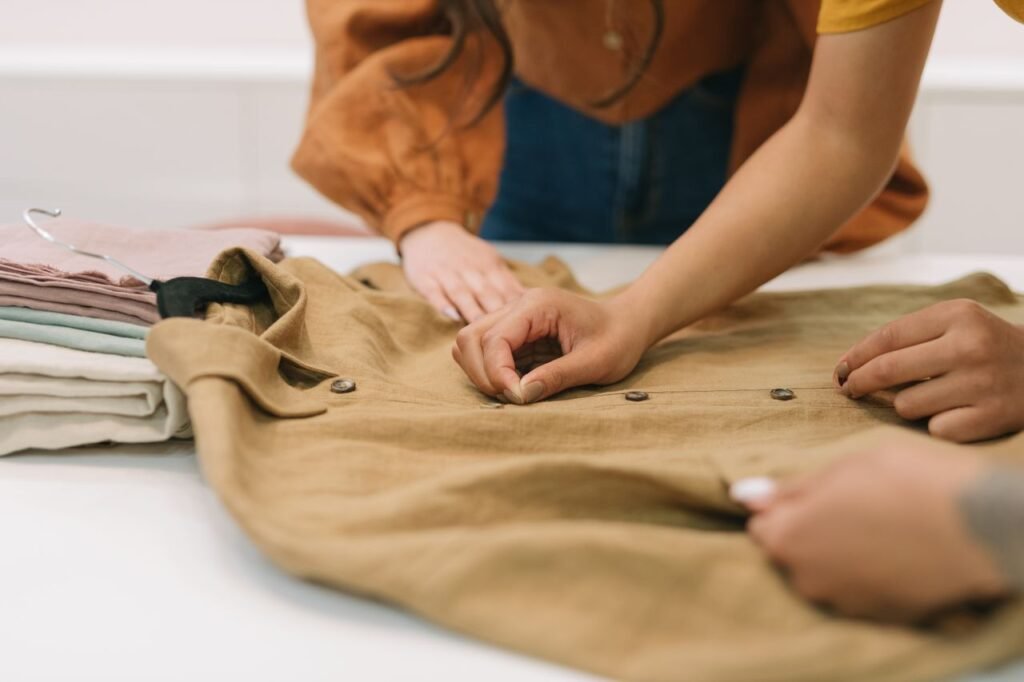
The reference sample should confirm that the required approval comments were correctly applied.
Depending on the garment, check:
- Construction
- Measurements
- Silhouette
- Balance
- Shape
- Placement
- Fit-related details
- Other applicable corrections
Compare the result against the final customer direction.
If the correction creates an unexpected issue, resolve it before releasing the pattern for production.
This is far less costly than discovering the same problem after bulk cutting.
11. Final Pattern, Final Spec, and Reference Sample Should Agree
Before production release, the major technical references should be consistent.
A useful final comparison is:
PRODUCTION PATTERN
↔ FINAL MEASUREMENT SPEC
↔ PP APPROVAL COMMENTS
↔ REFERENCE SAMPLE
Where applicable, the final tech pack should also reflect the same approved information.
The purpose is simple:
Different production references should not describe different garments.
If the pattern says one thing, the spec another, and the sample shows something else, production has not truly been finalized.
12. Production Pattern Is a Controlled Status
The term production pattern should mean more than “the latest pattern file.”
It should indicate that the pattern has passed the required development and approval process and represents the intended bulk-production standard.
In practical terms, this may mean:
Customer Direction Confirmed
→ Final Comments Applied
→ Pattern Corrected
→ Reference Garment Checked
→ Related Documents Aligned
→ Pattern Released
Only then should the pattern be treated as the production reference.
This distinction helps prevent a dangerous assumption:
Latest Pattern ≠ Automatically Production Pattern
13. Control Obsolete Patterns
Old patterns should not remain available in a way that allows them to be accidentally used for production.
At the same time, previous versions may still be valuable for traceability.
Therefore, the principle used for tech pack revision control also applies here:
Keep the history, but clearly identify what is no longer valid.
Obsolete patterns may be marked, archived, renamed, moved to a controlled location, or otherwise separated from the current production pattern depending on the factory’s system.
For more information about controlling technical revisions, read Apparel Tech Pack: What a Factory Needs Before Production.
14. Distribute the Production Pattern Carefully
Once the production pattern is finalized, the correct version must reach the people who actually need it.
Depending on the production structure, this may include:
- Factory pattern team
- Sample room
- Cutting department
- Production management
- Quality team
- Other relevant departments
Simply finalizing the pattern in the development office is not enough.
The factory must know:
Which pattern is approved for production?
And equally important:
Which previous patterns must no longer be used?
15. Include the Pattern in the Final Production Reference System
The production pattern should not exist as an isolated file.
It should be connected with the final order references used for production preparation.
One practical approach is to include or reference it through a PO Folder, or equivalent production reference package.
This package may bring together applicable final references such as:
- PO
- Final tech pack
- PP approval comments
- Final measurement specification
- Production pattern
- Reference / approved sample
- Bulk fabric reference
- Bulk trim references
- Routing guide
- Final inspection guide
- Other order-specific requirements
The exact contents depend on the order and customer.
The purpose is to give production one controlled set of references rather than forcing the factory to reconstruct the final requirements from development history.
16. Verify the Pattern During the PP Meeting
The pre-production meeting is another important control point.
At this stage, the team should confirm that the pattern being prepared for production matches the other approved references.
A useful comparison is:
PRODUCTION PATTERN
↔ REFERENCE SAMPLE
↔ FINAL SPEC
↔ TECH PACK
↔ APPROVED CONSTRUCTION
↔ ACTUAL BULK MATERIALS
This is particularly important when the pattern has changed after PP sample submission.
The factory should not assume that the pattern used for the submitted PP sample is automatically the final production pattern if later approval comments required corrections.
For more information, read Apparel Pre-Production Meeting: How to Prepare for Bulk Production.
17. Pattern Approval Does Not End Production Verification
Once the base production pattern is finalized, production preparation continues.
The pattern may need to be graded into the required size range.
Those graded patterns may require additional verification before full bulk cutting.
But the appropriate verification method should depend on production risk rather than assuming one fixed procedure for every order.
Factors may include:
- Customer history
- Factory experience
- Style complexity
- Size range
- Fabric behavior
- Grading complexity
- Previous production experience
This next stage deserves separate treatment because base-pattern approval and size-grading verification are related but different controls.
For more information, see the next Insights article: Apparel Size Grading: How to Maintain Fit Across a Size Range.
18. Pattern Management Is Risk Management
A pattern error has a unique characteristic in apparel production:
It can be repeated very efficiently.
If one sample is wrong, one garment may need correction.
If the production pattern is wrong and thousands of pieces are cut, the same problem can be multiplied across the entire order.
That is why pattern verification before bulk cutting has such high value.
The objective is not to create unnecessary approval steps.
It is to catch a technical error before multiplication makes it expensive.
The earlier a pattern error is found, the smaller the production consequence.
From Development Pattern to Production Standard
Garment pattern management is a controlled transition.
The process begins with a working pattern that changes as the garment develops.
Fit comments refine it.
PP approval establishes the customer direction.
Final comments are applied.
A reference garment verifies what the corrected pattern actually produces.
The final technical references are aligned.
Only then is the pattern ready to become a production standard.
The process can be summarized as:
DEVELOPMENT PATTERN
→ FIT SAMPLE
→ FIT COMMENTS
→ REVISIONS
→ PP SAMPLE
→ PP APPROVAL COMMENTS
→ FINAL CORRECTIONS
→ PRODUCTION PATTERN
→ REFERENCE SAMPLE
→ VERIFICATION
→ PRODUCTION RELEASE
The objective is not simply to finish a pattern.
The objective is to create a pattern the factory can confidently reproduce in bulk.
Need Help With Garment Pattern & Production Readiness?
Apparel Production Lab provides practical consulting for apparel product development, fit review, pattern coordination, sampling, tech pack management, pre-production planning, quality control, and manufacturing.
Whether you need help managing development changes, coordinating pattern corrections, reviewing production references, or preparing an approved garment for bulk manufacturing, we can help establish a practical process for your product and production requirements.