
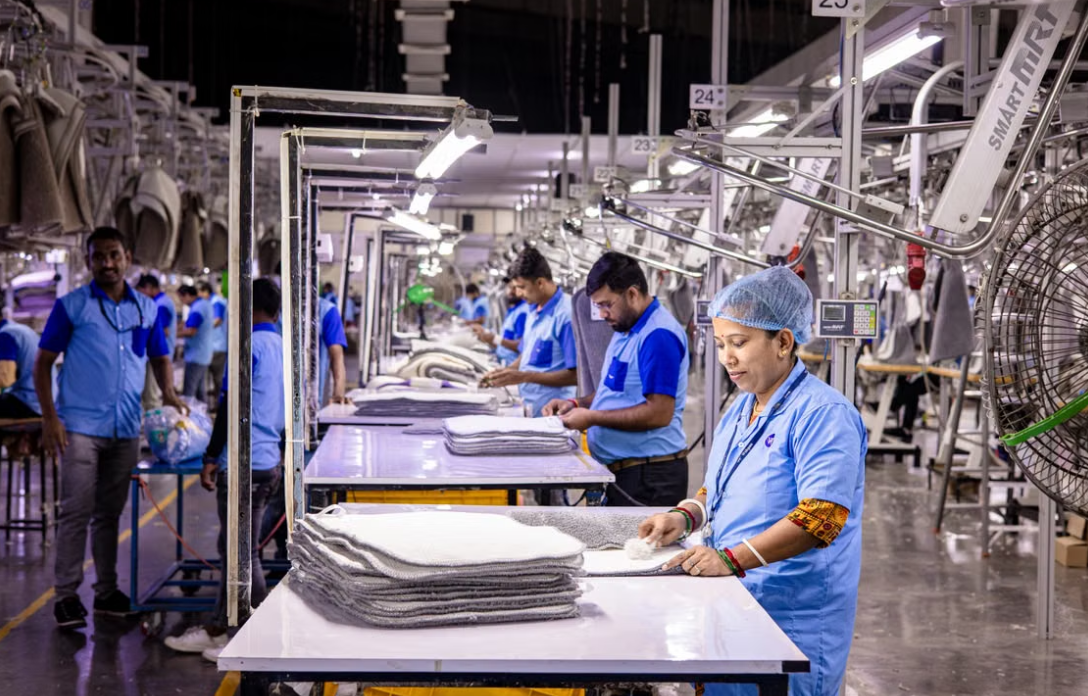
Apparel Factory Performance: The KPIs Buyers and Factory Managers Should Track
A garment factory can look busy without actually performing well.
Sewing machines may be running, production lines may appear full, and workers may be moving continuously across the factory floor. But activity alone does not tell us whether the factory is producing efficiently, controlling quality, meeting delivery commitments, or using its capacity effectively.
This is why apparel factory performance should be evaluated through a combination of operational KPIs rather than a single number.
For buyers, sourcing teams, and factory managers, the objective is not simply to collect more data. The real value of KPIs is understanding what the numbers are telling us about production — and how one performance indicator may affect another.
1. Production Output: Are We Producing What We Planned?
One of the most basic factory KPIs is production output.
At the line level, the comparison is straightforward:
Planned Output vs. Actual Output
If a sewing line is scheduled to produce 1,000 garments during the day but completes only 820, the difference requires investigation.
The important question is not simply:
“Why did we miss the target?”
Management should ask what caused the gap.
Possible causes may include:
- Operator imbalance
- Machine downtime
- Material shortages
- Quality problems
- Style complexity
- Excessive changeover time
- Poor line setup
- Absenteeism
- Unrealistic production targets
Production output therefore becomes more useful when it is analyzed together with other factory KPIs.
2. Sewing Line Efficiency: How Effectively Is Available Time Being Used?
Efficiency is one of the most commonly monitored KPIs in apparel manufacturing.
A typical sewing efficiency calculation compares the standard minutes earned from production with the total available operator minutes.
In simplified form:
Efficiency (%) = Standard Minutes Produced ÷ Available Working Minutes × 100
But the percentage alone should never be viewed in isolation.
A line running at 70% efficiency with stable quality and predictable output may sometimes be operationally stronger than a line reporting 85% efficiency while generating excessive defects, rework, overtime, or unfinished work.
The purpose of efficiency measurement is not simply to achieve the highest possible percentage.
It is to understand how effectively labor, equipment, workflow, and production time are being converted into acceptable finished garments.
3. Capacity Utilization: Is the Factory Using Its Available Capacity Properly?
Factory capacity and factory utilization are related but different.
Capacity describes what the factory should be capable of producing under defined operating conditions.
Capacity utilization asks how much of that capability is actually being used.
Low utilization may indicate:
- Insufficient orders
- Poor order allocation
- Material delays
- Excessive style changeovers
- Production bottlenecks
- Planning problems
Extremely high utilization can also create risk.
When every production line is fully committed with little flexibility, even a small delay can create pressure across multiple orders.
Strong factory management therefore requires not only filling capacity but maintaining enough flexibility to respond to production problems, order changes, and unexpected delays.
4. DHU and Defect Rate: Is Production Creating Quality Problems?
Production volume means little if garments repeatedly require correction.
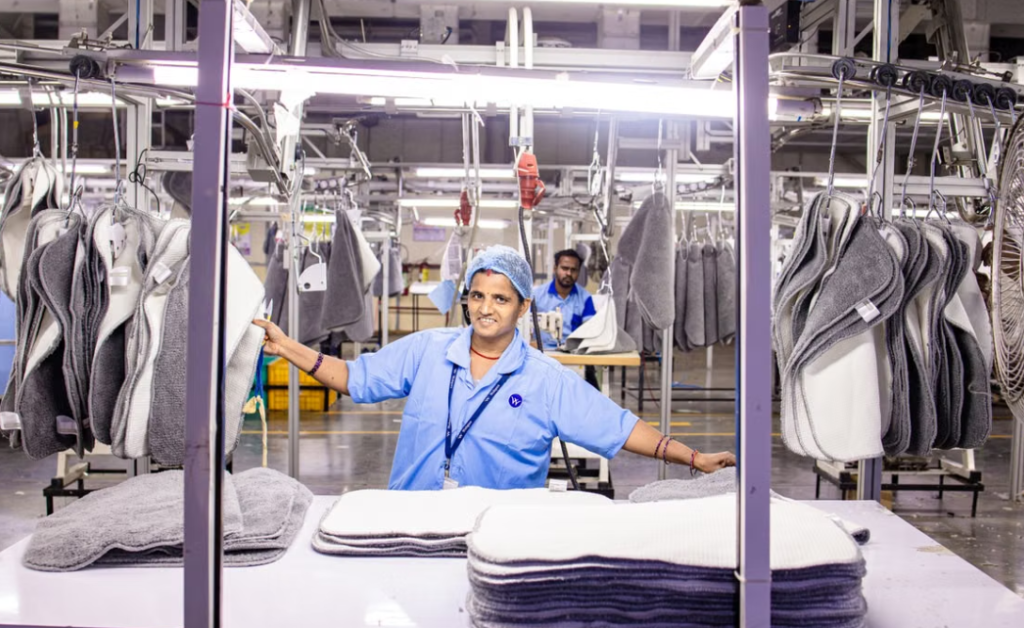
Two useful quality indicators are Defects per Hundred Units (DHU) and defect rate.
DHU helps management understand how many defects are being generated relative to inspected production.
For example, if 100 garments are inspected and 12 defects are identified, the DHU is 12.
This does not necessarily mean that 12 garments are defective. One garment may contain several defects.
The value of DHU is that it helps identify where quality problems are developing during production.
Management should look beyond the total number and ask:
- Which operations are creating the defects?
- Are the same defects repeating?
- Is one operator or machine creating a disproportionate share?
- Did the problem begin after a material, method, or style change?
- Is corrective action actually reducing the problem?
Early detection is critical because defects become more expensive to correct as garments move further through production.
5. Rework Rate: How Much Production Is Being Done Twice?
Rework is one of the most important hidden costs inside a garment factory.
When a garment must return to an earlier operation for correction, the factory consumes labor and production time without creating additional saleable output.
High rework can affect:
- Line efficiency
- Production output
- Labor cost
- Quality performance
- Finishing flow
- Shipment readiness
This is why a factory can appear productive while actually losing significant capacity through repeated corrective work.
Rework should therefore be monitored not only as a quality issue but also as a production-cost and capacity issue.
6. On-Time Delivery: Does Factory Performance Lead to Shipment?
Ultimately, factory performance must support the delivery commitment.
A factory may show acceptable sewing efficiency and reasonable quality results, but those indicators have limited value if orders repeatedly ship late.
On-time delivery should therefore be treated as an outcome KPI that reflects the combined performance of many functions:
Material Readiness → Cutting → Sewing → Finishing → Inspection → Packing → Shipment
Delivery problems often begin much earlier than the final shipping date.
A fabric delay, late trim approval, slow cutting start, production imbalance, repeated quality problem, or finishing bottleneck can gradually consume the time available in the production calendar.
Good factory management identifies those risks early rather than discovering them when the shipment date is already approaching.
7. Absenteeism: A Workforce KPI With Direct Production Impact
Worker attendance may appear to be primarily an HR issue, but in labor-intensive apparel production it can directly affect factory performance.
If several operators are absent from one production line, the original line balance may no longer work.
The result can include:
- Bottlenecks
- Lower output
- Operator reassignment
- Reduced efficiency
- Increased overtime
- Quality problems
Factories should therefore monitor absenteeism trends rather than treating individual absences as isolated events.
Recurring absenteeism in a department, shift, or production period may reveal a broader operational problem that deserves management attention.
8. WIP: Is Production Flowing or Accumulating?
Work-in-process, or WIP, provides another important view of factory performance.
Some WIP is necessary to maintain production flow.
Too much WIP, however, can hide problems.
Large piles of partially completed garments between operations may indicate:
- Poor line balance
- Bottlenecks
- Uneven operator performance
- Machine constraints
- Quality holds
- Poor production control
Excessive WIP also increases handling, makes problems harder to identify, and can delay the discovery of defects.
The objective is not necessarily to eliminate WIP but to maintain controlled production flow.
9. Overtime: A Solution or a Warning Signal?
Overtime is sometimes necessary in apparel manufacturing.
A temporary production issue, urgent order, or unexpected disruption may justify additional working hours.
But when overtime becomes the normal method of achieving production targets, management should investigate the underlying reason.
Persistent overtime may indicate:
- Incorrect capacity planning
- Low efficiency
- Late material arrival
- Poor production scheduling
- Excessive rework
- Unrealistic delivery commitments
Overtime can solve a short-term output problem while masking a longer-term management problem.
That distinction is important.
10. KPI Relationships Matter More Than Individual Numbers
The biggest mistake in factory performance management is evaluating KPIs independently.
Consider a factory reporting:
Efficiency: Up
Output: Up
Overtime: Up
DHU: Up
Rework: Up
At first glance, the higher efficiency and output may look positive.
But if the factory is simultaneously increasing overtime, defects, and rework, the overall production result may be less healthy than the efficiency figure suggests.
The opposite can also occur.
A temporary reduction in output may be acceptable if the factory is correcting a serious quality problem before it spreads through bulk production.
KPIs should therefore be interpreted as a connected system rather than a scoreboard of independent numbers.
What Buyers Should Look For in Apparel Factory Performance
Buyers do not necessarily need access to every internal factory metric.
However, when evaluating important suppliers, buyers should understand whether the factory has a disciplined system for monitoring performance.
Useful questions include:
- How does the factory establish daily production targets?
- How is line efficiency measured?
- How are defects and rework tracked?
- How quickly are production problems escalated?
- How is capacity reviewed before accepting new orders?
- How does management track shipment risk?
- What happens when a line falls behind plan?
- How are recurring problems analyzed and corrected?
The quality of the answers can reveal a great deal about the maturity of the factory’s production-management system.
The Factory Management Perspective
Strong factory management is not about maximizing every KPI.
It is about balancing productivity, quality, cost, capacity, workforce stability, and delivery performance.
A factory that focuses only on output may create quality problems.
A factory that focuses only on efficiency may overload production lines.
A factory that focuses only on delivery may depend excessively on overtime.
The strongest factories use KPIs to identify problems early, understand their causes, and make better operational decisions.
The real purpose of factory performance measurement is therefore not the report itself.
It is what management does after seeing the numbers.
Need Support With Apparel Production and Factory Management?
Apparel Production Lab provides practical support in factory evaluation, production management, quality control, costing, sourcing, and supply-chain operations based on real apparel-industry experience.