
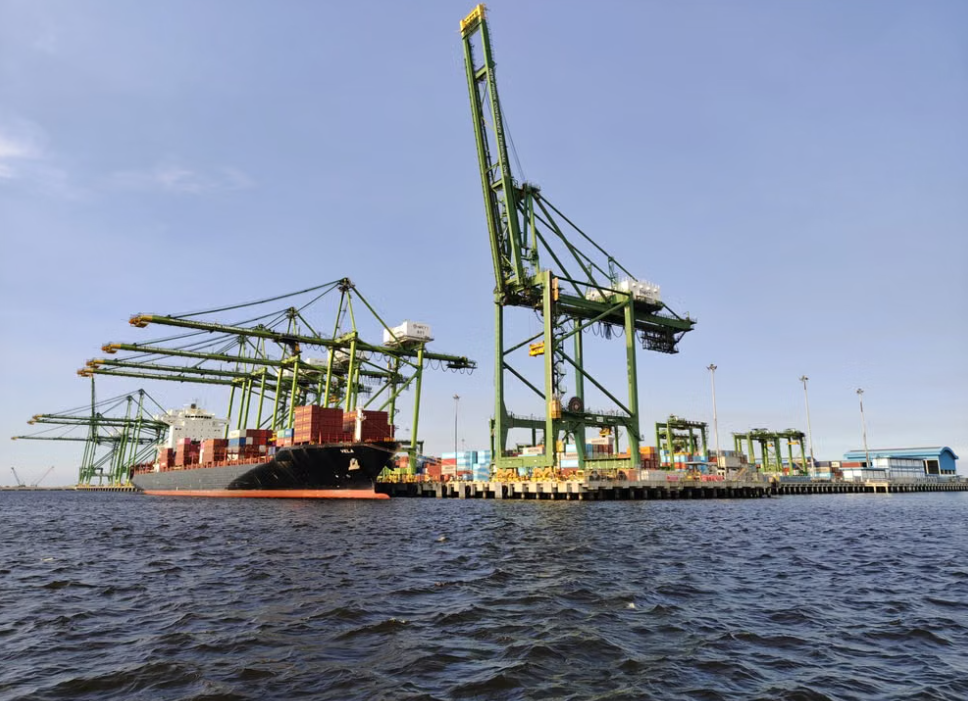
Vietnam–U.S. West Coast Ocean Freight Update: October 2026 Rates from Haiphong to Los Angeles
Ocean freight remains an important part of apparel sourcing and delivery planning as companies prepare shipments from Vietnam to the U.S. West Coast in October 2026.
A recent freight quotation received by Apparel Production Lab provides an updated view of LCL and FCL ocean freight from Vietnam to Los Angeles / Long Beach, including standard ocean services and premium Matson options.
For comparison, see our September 2026 Haiphong–Los Angeles Ocean Freight Update.
The rates below should not be interpreted as market-wide benchmark rates. They represent a specific forwarder quotation and are useful as a practical reference for understanding the relative cost of different service options.
The quotation is valid through October 14, 2026, meaning rates should be reconfirmed before an actual booking is made.
October 2026 LCL Rates: Haiphong to Los Angeles
For less-than-container-load shipments from Haiphong to Los Angeles, the quotation provides two options:
| Carrier | Ocean Freight | DDC |
|---|---|---|
| ONE | $78 / CBM | $28.10 |
| ZIM | $95 / CBM | $28.10 |
The difference between the two quoted base ocean rates is $17 per CBM.
For a small shipment, that difference may not materially change the overall sourcing decision. As shipment volume increases, however, the difference becomes more meaningful.
Importers should also remember that the ocean freight rate alone does not represent the complete logistics cost. Destination charges, handling, customs-related expenses, inland transportation, and other applicable charges should be considered when comparing shipping options.
October 2026 Ocean Freight Update: FCL Rates
The quotation also includes full-container-load options from Haiphong / Ho Chi Minh City to Los Angeles / Long Beach.
Among the clearly identified standard-service quotations were:
| Carrier | 20′ | 40′ / 40’HC | 45’HC |
|---|---|---|---|
| Wan Hai | $5,298 | $6,668 | — |
| Maersk | $5,485 | $6,768 | $7,998 |
The quoted difference between Wan Hai and Maersk is relatively modest for the listed 20-foot and 40-foot container options.
This means the lowest freight rate should not automatically determine the booking decision.
For apparel shipments, sailing schedule, available space, transit time, cargo-ready date, port cutoff, and delivery requirements may be just as important as a relatively small difference in ocean freight.
Premium Matson Services Carry a Significant Cost Difference
The same quotation includes Matson MAX and CLX services at substantially higher rates.
| Service | 20′ | 40′ | 40’HC | 45’HC |
|---|---|---|---|---|
| Matson MAX | $9,568 | $11,898 | $13,149 | $14,845 |
| Matson CLX | $10,198 | $12,698 | $14,245 | $15,925 |
These rates show a clear premium compared with the standard ocean-service quotations.
That premium should therefore be evaluated against the business value of the service rather than freight cost alone.
For a normal production order with sufficient lead time, a lower-cost standard service may be commercially appropriate.
For a time-sensitive shipment, however, the calculation can be different.
A delayed apparel shipment can create costs that extend far beyond ocean freight, including:
- Missed retail delivery windows
- Warehouse or distribution disruption
- Customer chargebacks
- Airfreight recovery
- Production rescheduling
- Inventory shortages
- Lost sales opportunities
In those situations, paying more for a transportation option that better supports the required delivery schedule may sometimes be economically justified.
Freight Decisions Should Begin Before the Cargo Is Ready
One of the most common production-management mistakes is waiting until garments are almost packed before deciding how they will be shipped.
Transportation planning should begin much earlier.
Production teams should understand the required ship date and delivery window while the order is still moving through production.
If production begins to fall behind schedule, the logistics options should be evaluated immediately rather than waiting until the final packing date.
That gives sourcing and logistics teams more time to compare options such as:
Standard ocean service → Faster ocean service → Partial expedited shipment → Airfreight
The earlier the decision is made, the more alternatives are usually available.

Container Utilization Also Matters
The quoted FCL rates demonstrate another important cost-control principle.
Moving from a 20-foot container to a 40-foot or 40-foot high-cube container does not necessarily double the freight cost.
For example, the quoted Wan Hai rates are:
- 20′ — $5,298
- 40′ / 40’HC — $6,668
The difference is only $1,370.
For Maersk:
- 20′ — $5,485
- 40′ / 40’HC — $6,768
The difference is $1,283.
This illustrates why container utilization should be considered carefully when planning apparel shipments.
If order volume is close to the capacity threshold between container sizes, better carton planning, CBM calculation, and shipment consolidation can materially affect freight cost per garment.
The correct question is not simply:
“What is the container rate?”
It is:
“What is the logistics cost per unit after we optimize the shipment?”
What Apparel Sourcing Teams Should Do Now
For Vietnam shipments planned for October, sourcing and production teams should review the following before confirming bookings:
- Confirm the actual cargo-ready date with the factory.
- Compare available sailing schedules with the required delivery date.
- Reconfirm rates before booking, especially after the quotation validity date.
- Compare total logistics cost—not only the base ocean freight.
- Calculate shipment CBM and evaluate container utilization.
- Identify time-sensitive orders that may require faster service.
- Maintain an alternative shipping plan for orders at risk of production delay.
The freight quotation reviewed for this update also included sailing schedules for Matson, ONE, and HMM, reinforcing the importance of evaluating rate and schedule together.
The Production Management Perspective
Freight should not be managed separately from apparel production.
Production delays affect transportation choices.
Transportation choices affect landed cost.
And both ultimately affect whether an order reaches the customer on time and at the expected margin.
The strongest approach is therefore to connect:
Production status → Cargo-ready date → Sailing schedule → Freight option → Required delivery date
When those elements are reviewed together, logistics becomes part of production planning rather than an emergency decision at the end of the order.
Need Help With Apparel Production and Supply-Chain Planning?
Apparel Production Lab provides practical support for apparel sourcing, production management, costing, supplier evaluation, and supply-chain planning.
Source:
Freight-forwarder quotation received by Apparel Production Lab, September 28, 2026. Rates quoted for October 2026 Vietnam–U.S. West Coast shipments and valid through October 14, 2026.
Freight rates and sailing schedules can change without notice. The figures above are provided for general industry reference and should be reconfirmed directly with the freight forwarder or carrier before booking.