
Sourcing Diversification 2.0: What Apparel Suppliers Should Prepare For
Apparel supplier consolidation is becoming an increasingly important part of global sourcing strategy in 2026.
For years, apparel sourcing diversification generally meant adding more production countries and reducing dependence on a single sourcing location. That strategy helped brands spread geopolitical, tariff, capacity, and supply-chain risks across a wider network.
In 2026, however, sourcing diversification appears to be entering a more selective phase.
U.S. fashion companies are maintaining geographically diverse sourcing networks while placing greater emphasis on fewer, stronger, and more capable supplier relationships. Instead of continuously adding factories and vendors, many companies are looking for strategic suppliers that can provide flexibility, reliable execution, regulatory compliance, and long-term operational support.
This emerging approach can be described as Sourcing Diversification 2.0.
For apparel suppliers, the change has an important implication: having competitive prices and available capacity may no longer be enough. Suppliers increasingly need to demonstrate that they can help customers manage uncertainty, control execution, and reduce operational risk.
What Is Changing in Apparel Sourcing?
The 2026 U.S. Fashion Industry Benchmarking Study, based on responses from executives at 30 leading U.S. fashion companies, indicates that the industry continues to operate under significant pressure from tariffs, rising sourcing costs, geopolitical uncertainty, and increasingly complex compliance requirements.
Companies are not necessarily abandoning sourcing diversification. They continue to work across multiple countries and production regions. What appears to be changing is how they manage suppliers within those networks.
The study indicates that approximately 58% of participating companies were pursuing sourcing diversification in 2026, compared with 83% in 2024. At the same time, companies were showing greater interest in supplier consolidation, strategic partnerships, and closer cooperation with established vendors.
This does not mean that brands are returning to a single-country or single-supplier model. Rather, they are becoming more deliberate about where they place orders and which suppliers they consider strategically important.
The developing model combines two objectives:
- Maintain geographic flexibility across several sourcing countries.
- Concentrate meaningful business with suppliers that can consistently perform.
The result is a sourcing network that may remain geographically broad but becomes more selective at the vendor and factory level.
Why Supplier Consolidation Is Becoming More Attractive
Managing a large supplier base creates operational complexity.
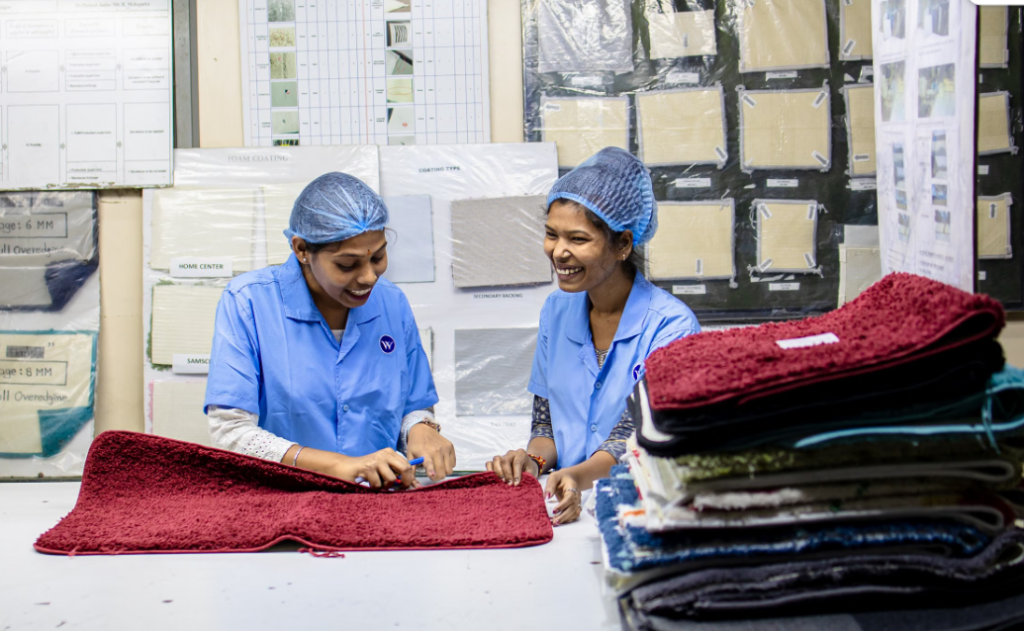
Every additional vendor introduces new communication channels, production systems, quality practices, compliance records, capacity limitations, and delivery risks. When sourcing teams are also dealing with tariff changes, cost pressure, shorter lead times, and stricter documentation requirements, that complexity becomes increasingly difficult to manage.
Working more closely with a smaller number of capable suppliers can provide several advantages.
Better Production Visibility
Strategic suppliers are generally expected to provide accurate and timely information about material status, approvals, production progress, quality issues, and shipment readiness.
Reliable visibility allows buyers to identify problems earlier and make decisions before a delay becomes unavoidable.
More Consistent Quality
Longer-term supplier relationships allow both sides to develop a clearer understanding of product standards, workmanship requirements, testing procedures, and recurring quality risks.
This accumulated knowledge can reduce repeated mistakes and improve consistency across multiple orders.
Greater Capacity Flexibility
A strategic supplier may be asked to adjust production capacity, manage urgent orders, support smaller trial quantities, or respond to changes in delivery priorities.
Factories that can plan capacity transparently and present realistic alternatives are more valuable than suppliers that simply accept every requested delivery date.
Stronger Compliance Control
Brands face increasing pressure to verify labor, environmental, product, and supply-chain information. They therefore need suppliers that can maintain organized records and provide credible supporting documentation.
Compliance is no longer limited to passing a periodic factory audit. It is becoming part of routine order execution and supplier performance.
Faster Problem Resolution
Production problems cannot always be prevented. Fabric delays, failed testing, approval changes, workmanship concerns, and shipping disruptions remain part of apparel manufacturing.
The real difference is often how quickly a supplier identifies the problem, communicates its impact, and presents a workable recovery plan.
What This Means for Apparel Suppliers
Supplier consolidation creates both risk and opportunity.
Factories that are treated only as interchangeable production sources may face greater pressure on prices and order volume. When brands reduce the number of active vendors, suppliers with weak communication, inconsistent quality, limited documentation, or unreliable delivery performance may be removed from the sourcing base.
Capable suppliers, however, may receive a larger share of business and gain access to longer-term customer relationships.
The competitive question is therefore changing.
It is no longer only:
Can this factory make the product at the required price?
It is increasingly:
Can this supplier help the customer manage cost, quality, compliance, capacity, and delivery risk over time?
This broader question requires suppliers to improve not only factory operations but also the quality of the information and decisions they provide to customers.
Six Capabilities Suppliers Should Strengthen
1. Transparent Production Planning
Suppliers should be able to present a realistic production schedule covering fabric and trim readiness, approvals, cutting, sewing, finishing, inspection, and shipment.
A schedule should not be created simply to match the customer’s requested delivery date. It should reflect actual material lead times, available capacity, approval requirements, and operational constraints.
When a requested date is not achievable, the supplier should explain why and propose practical alternatives.
2. Early Risk Communication
Customers should not learn about a delay only when the shipment date is approaching.
Suppliers should identify risks early, communicate the possible effect on production, and recommend corrective action. This includes risks related to material availability, laboratory testing, sample approval, factory capacity, quality performance, and logistics.
Early communication builds credibility, even when the information is difficult.
3. Reliable Costing
Competitive pricing remains essential, but buyers also need confidence that a quotation is complete and sustainable.
Suppliers should understand material consumption, processing loss, labor requirements, overhead, packaging, testing, logistics, duty implications, and other cost elements that may affect the final price.
An unrealistically low initial quotation that later requires repeated adjustments weakens the customer’s trust.
4. Documented Quality Management
Quality performance should not depend entirely on final inspection.
Strong suppliers establish product requirements before production, confirm material and workmanship standards, monitor critical operations, document findings, and take corrective action during manufacturing.
Customers increasingly value suppliers that can explain how quality is controlled, not merely state that quality is important.
5. Organized Compliance and Traceability Information
Suppliers should maintain current and accessible records covering factory certifications, audit status, material origin, test reports, subcontracting, and other required compliance information.
The ability to retrieve accurate documentation quickly can influence whether a supplier is considered ready for strategic business.
6. Flexible but Disciplined Execution
Flexibility does not mean agreeing to every customer request without evaluating the consequences.
A strategic supplier should understand which adjustments are possible, what additional cost or risk may be involved, and how changes will affect other production commitments.
Professional flexibility requires both responsiveness and operational discipline.
Price Will Still Matter—But It Will Not Decide Everything
Apparel sourcing will always remain cost-sensitive. Brands and retailers must protect margins, respond to consumer price expectations, and manage tariff and logistics expenses.
Nevertheless, the lowest quoted price does not necessarily produce the lowest final cost.
Late deliveries, quality failures, airfreight, repeated sampling, production interruptions, compliance problems, and inaccurate documentation can quickly eliminate an apparent price advantage.
For this reason, sourcing teams may increasingly evaluate the supplier’s total operational value rather than comparing FOB prices alone.
Suppliers should therefore be prepared to demonstrate how they contribute to:
- Delivery reliability
- Quality consistency
- Faster decision-making
- Reduced production risk
- Accurate costing
- Compliance readiness
- Supply-chain visibility
These capabilities can help a supplier defend its value even when it is not the lowest-priced option.
Strategic Supplier Status Must Be Earned
A supplier does not become strategic simply because it has worked with a customer for many years or receives a large order volume.
Strategic status is built through consistent execution and dependable decision support.
Customers need to know that the supplier will present accurate information, protect product requirements, communicate problems honestly, and respond constructively when conditions change.
This level of trust develops over multiple orders. It can also be lost quickly when suppliers hide delays, submit unreliable information, or repeatedly make commitments they cannot meet.
Supplier consolidation therefore raises the performance standard. It may reduce the number of approved vendors, but it also creates an opportunity for well-managed suppliers to become more important to their customers.
Preparing for Apparel Supplier Consolidation
Apparel suppliers should review their operations from the customer’s perspective.
Important questions include:
- Do our production schedules reflect actual conditions?
- Can we identify delivery risks before they become critical?
- Are our quotations complete and professionally supported?
- Can we provide accurate compliance and traceability documents quickly?
- Do our quality systems prevent problems during production?
- Can we explain capacity limitations and offer realistic alternatives?
- Does our communication help the customer make better decisions?
Factories that cannot answer these questions confidently may struggle as brands make their supplier networks more selective.
Factories that can provide strong answers may be positioned to receive more stable orders, participate earlier in product and production decisions, and build deeper customer relationships.
September 2026 Webinar Update: What Suppliers Should Prepare For
The September 17 ITC–USFIA webinar reinforced an important message for apparel suppliers: sourcing diversification is becoming more strategic, but it is not simply a matter of shifting orders away from one country and into another.
Using findings from the 2026 Fashion Industry Benchmarking Study together with U.S. trade statistics and product-level analysis, the webinar compared established apparel sourcing countries such as China and Vietnam with emerging sourcing destinations including Guatemala, Sri Lanka, Egypt, and Jordan.
The discussion highlighted that supplier competitiveness increasingly depends on a combination of factors—not simply FOB price or tariff advantage.
For suppliers seeking to strengthen relationships with U.S. buyers, several areas deserve particular attention:
1. Product capability matters.
Emerging sourcing destinations need to demonstrate where they can compete effectively by product category rather than attempting to compete across every apparel segment.
2. Reliability remains critical.
Buyers increasingly need suppliers that can maintain production, manage lead times, communicate problems early, and respond quickly when sourcing conditions change.
3. Trade and compliance readiness are becoming part of supplier competitiveness.
Tariffs, trade-policy uncertainty, forced-labor concerns, sustainability requirements, and other compliance obligations increasingly influence sourcing decisions alongside traditional considerations such as cost and quality.
4. Diversification creates opportunities—but also higher expectations.
As U.S. companies explore a broader sourcing base, suppliers in emerging regions may gain new opportunities. However, gaining initial orders is different from becoming a long-term strategic supplier. Factories must demonstrate consistent quality, delivery performance, transparency, and operational capability.
5. Suppliers should understand what U.S. buyers are trying to solve.
The strongest sourcing proposition is not necessarily “we are cheaper.” Increasingly, suppliers need to show how they can help buyers reduce risk, improve flexibility, manage compliance, and build a more resilient sourcing portfolio.
The Practical Takeaway
For apparel suppliers, sourcing diversification should be viewed as an opportunity to build a stronger value proposition—not simply as an opportunity created by difficulties in competing countries.
Factories that understand their product strengths, improve reliability and compliance capabilities, and communicate clearly with buyers will be better positioned to participate in the next stage of U.S. sourcing diversification.
The key question for suppliers is therefore no longer only:
“Can we offer a competitive price?”
It is increasingly:
“What sourcing problem can we solve for the buyer?”
Conclusion
Sourcing diversification is not disappearing. It is becoming more strategic.
Brands may continue sourcing from multiple countries, but they are likely to expect more from the suppliers that remain within their preferred networks. Reliability, visibility, compliance, communication, and problem-solving capability will carry greater weight alongside price and production capacity.
For apparel suppliers, the objective should not be simply to remain on an approved vendor list. It should be to become a partner that customers can depend on when costs change, schedules tighten, regulations increase, and supply-chain conditions become uncertain.
That is the practical meaning of Sourcing Diversification 2.0.
Strengthen Your Sourcing and Supplier Strategy
Apparel Production Lab helps apparel businesses evaluate sourcing options, improve supplier and factory coordination, strengthen production control, and build more reliable supply-chain processes.
Editor’s Note
Editor’s Note — Updated September 2026: This article has been updated following the September 17, 2026 ITC–USFIA webinar, with additional observations on U.S. apparel sourcing trends, supplier competitiveness, sourcing diversification, and practical implications for apparel manufacturers and suppliers.
Source: ITC–USFIA Webinar — Evolving U.S. Apparel Import and Sourcing Trends: What Suppliers Need to Know and How to Prepare, September 17, 2026.